Showing posts with label poetry. Show all posts

Sunday, October 10, 2021

Latinx Lit: The Wild Book

 The Wild Book

A Review by Amanda Kendall

The Wild Book - Kindle edition by Engle, Margarita. Children Kindle eBooks  @ Amazon.com.

Bibliography:
Engle, Margarita. 2014. The Wild Book. Boston: HMH Books for Young Readers. ISBN 0544022750
 
Plot Summary:
Fefa has always struggled with words: reading them, writing them and expressing them. Her doctor calls it "word blindness" (now called dyslexia) because letters and words are all jumbled up for her. To help, her mother gives her a blank notebook to fill with words. Hesitant at first, she begins to write her thoughts, words, and poems in the notebook very slowly and deliberately, saying "Even scribbling is such a struggle. Will my blank book ever be full?" (Engle 2014). Over time and with tremendous patience and practice, her confidence and understanding of words grows until her notebook is a thriving garden of words and stories.  In her journal she shares her personal struggles, her family's love of poetry, and the daily dangers of living in Cuba in 1912.

Critical Analysis:
The Wild Book is a beautiful novel in verse based on Engle's grandmother's experiences growing up in Cuba. Engle's free verse poetry is filled with vivid imagery of both the landscape and the characters. The setting plays an intricate role in the story. 1912 Cuba was in a state of unrest. After winning independence from Spain the country was facing uncertain times. Papa explains "rebellions and choas/ have returned/ Danger roams again/ but this time/ the wild men are not soldiers,/ just greedy bandits/ who kidnap children/ and demand/ ransom money" (Engle 2014). Engle skillfully weaves the historical unrest during this time period into events throughout the novel.
 
Engle's characters are beautifully developed and grounded in authenticity. Her mother, father, and brother play a particularly strong role in Fefa's story. Her mother guides and inspires her at the beginning. Her brother encourages her to develop her skills in the middle and finally her father trusts her correctly identify the bandits demanding a ransom from the family. Each supporting character has an important role to play on Fefa's journey.
 
Although working within prose, Engle beautifully develops Fefa's story of struggling reader to budding poet. Engle's manipulation and stretching of words show Fefa's progress as she learns to read. In the beginning everything is labored and slow. "Mama heps me learn how to picture the sep-a-rate parts of each mys-te-ri-ous syl-la-ble. Still, its not easy to go so ss-ll-oo-ww-ll-yy. S l o w l y. SLOWLY!" (Engle 2014). Engle also uses all caps repeatedly to emphasize Fefa's frustration at reading OUT LOUD. By the end of the novel, Fefa is still stretching out words but the words have changed. As she breaks down "Pre-car-i-ous" (Engle 2014) it becomes clear she is no longer the struggling reader she started out as. Coming full circle in her development, Fefa says, "So I puck up one/ of the thick books/ I used to hate, and I open/ its gate-shaped cover/ and I let my strong eyes/ travel/ slowly/ exploring" (Engle 2014). It takes the course of the novel, but eventually Fefa finds her courage in the power of words and now reads slowly not out of necessity, but rather out of enjoyment and wonder.

In addition to authentic characters and setting, The Wild Book is packed with cultural markers that celebrate the Cuban experience. Throughout the novel, Engle blends Spanish words into the text like describing the pansies as pensamiento flowers and consistently referring to alligators as caimán. She includes details of Cuban flavors in everyday life like coconut milk and saffron. From dancing the wild rumba to reciting the poetry of Rubén Darío, details of authentic Cuban life in 1912 are intertwined with the poetic elements that bring the story to life. Themes of love and family across generations are present not only within the novel, but in the fact that Engle is telling her grandmother's story. Finally the inclusion of poetry within a novel written in verse highlights the cultural importance of poetry to the Cuban community. In her author's note Engle says, "it was a time when poetry was a treasured aspect of daily life" (Englie 2014). By referencing other Latinx poets, including a poetry contest in the story, and using prose to tell Fefa's story, Engle has embraced and celebrated Cuba's love of poetry.

Review Excerpts & Awards: 
 
HORN BOOK GUIDE (Spring 2013) "Engle relates, with some fictionalization, her grandmother Fefa's childhood in dangerous early-twentieth-century Cuba. Fefa suffers from "word-blindness" (dyslexia), but she slowly learns to read and write as a blank book from Mama becomes her "garden" in which "words sprout / like seedlings." Spare, dreamlike verse pairs perfectly with a first-person narrator whose understanding of written language is unique."
 
KIRKUS REVIEWS (February 1, 2012) "he author gives readers a portrait of a tumultuous period in Cuban history and skillfully integrates island flora, fauna and mythology into Fefa's first-person tale. This canvas heightens Fefa's determination to rise above the expectations of her siblings, peers and society. A beautiful tale of perseverance."

 Curricular Connections:

  • Listen to Margarita Engle share the backstory of the book here. Discuss how Engle uses her family's history to inspire the story and connect to students writing their own stories.
  • Create a garden of words art project. Encourage students to use a variety of colors and shapes in their concrete poetry to make the gardens look wild and overgrown. Use this art project to turn the metaphor into a reality. 
  • Pair with poems by Rubén Darío for extended reading.

Thursday, October 7, 2021

Latinx Lit: Yum! ¡MmMm! ¡Qué Rico!: Americas' Sproutings

 Yum! ¡MmMm! ¡Qué Rico!: 

Americas' Sproutings

A Review by Amanda Kendall
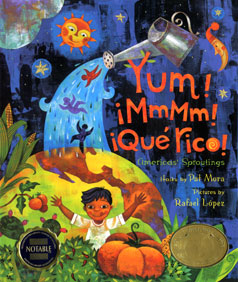
 Yum! ¡Mmm! ¡Qué Rico! America's Sproutings

Bibliography:
Mora, Pat. 2007. Yum! ¡MmMm! ¡Qué Rico!: Americas' Sprouting. Ill. by Rafael López. Orlando: Voyager Books. 0152000769
 
Plot Summary:
In this collection of haiku poems, Mora takes the reader on a tasty journey of native foods from the Americas. Each food is celebrated in a beautiful double page spread that includes a haiku, an informational paragraph of the history of the food, and vibrant illustrations. From blueberries from Maine to tomatoes from Peru, the chosen foods represent the wide variety of delicacies found on the two American continents. All 14 delicious poems capture the unique qualities of the food and honor the impact each one has had on the diverse cultures of the Americas.

Critical Analysis:
Yum! ¡MmMm! ¡Qué Rico! is a celebration of food, culture, and poetry! Mora's words masterfully use the five, seven, five rules of haiku to capture the essence of each food. Filled with powerful imagery that excites all the senses, readers find themselves immersed in the food in only a few lines. Cranberries are described as "Marsh-floating hard bead/ simmers then POPS! in hot pot/ Scarlet fireworks" (Mora 2007). Each food seems to come alive in those seventeen syllables. Mora also captures the experiences of eating the foods. In the poem "Chile" she writes, "Dad bites green mouth-fire/ laughs when tears fill his eyes, sighs/ ¡Mmmm! This heat tastes good" (Mora 2007). Mora's words paint a picture of both the food and the experience with humor and creativity. The addition of informational paragraphs on each page add to the overall appeal of the text.  Each brief history includes the believed origins of the food, the first uses of the food, and other unique fun facts about each. For example, a papaya can weigh as much as twenty pounds (Mora 2007).
 
The text is made even more engaging through López's joyful and vibrant illustrations. Each page is work of art. López layers colors and varies hues to create beautiful details on each page while using brightly colored textured backgrounds to give each illustration depth and complexity. The people and cultures are authentically and skillfully represented with many images paying homage to the artistic style of Diego Rivera. Filled with humor and joy, these lively illustrations match perfectly with Mora's poems.
 
Cultural markers for this text are woven into the poetry and illustrations. When describing the prickly pear, Mora writes, "Cactus fruit becomes syrup/ and dulces. Surprise!" (Mora 2007). Mora uses both Spanish and English words in her poetry, blending the two languages seamlessly in several poems. López's illustrations authentically represent the many different Latin cultures found within the book. He has authentically represented the people of the Americas with a variety of skin tones, hair styles, and dress. A man from Mexico is depicted wearing a Mexican palm cowboy hat with a modern brim showing that López's illustrations avoid stereotyped or outdated clothing choices. Animals, plants, and instruments like maracas and the timba are also carefully chosen to represent the cultures of a food's origin. Details in each page were carefully chose to authentically reflect the culture behind the food. López even includes traditional housing of the Pueblo in the background of the corn haiku. López has accurately, respectfully, and fully represented the Americas within these pages.
 
Because this is a celebration of foods originating in the Americas, the poems include foods from North, Central, and South America. The political borders have been erased and foods native to the people and cultures of the lands emerge. In the author's note, Mora explains her appreciation of variety in foods, language, people, and poetry (Mora 2007). This celebration of diversity in the native foods of Americas and the cultures that sprouted from these foods is a wonderful way to celebrate the Latinx experience.


Review Excerpts & Awards: 

BOOKLIST (December 1, 2007) "This inventive stew of food haiku celebrates the indigenous foods of the Americas. Each of the 13 poems appears on a gloriously colorful double-page spread, accompanied by a sidebar that presents information about the origin of the food. From blueberries to prickly pears to corn, the acrylic-on-wood-panel illustrations burst with vivid colors and stylized Mexican flair"
 
SCHOOL LIBRARY JOURNAL (September 1, 2007) "This concept book serves as a delicious introduction to 14 types of food, all of which have their origins in the Americas. Snippets of information and a haiku poem accompany each one, ranging from blueberry and chili pepper through papaya, prickly pear, and vanilla. Using English and a smattering of Spanish words, Mora crafts a playful introduction to each one, as in "Pumpkin": "Under round luna,/scattered tumblings down the rows,/autumn's orange face." The sense of whimsy is further underscored in L-pez's colorful acrylic on wood-panel illustrations. Artful compositions and brilliant complementary colors bear out the book's multicultural themes."
  • Amérias Award for Children’s and Young Adult Literature Commended Title , 2008
  • Texas Bluebonnet Award (TBA) Master List, 2008-2009
  • ALA Notable Children's Books, 2008
  • Chicago Public Library's Best of the Best Books, 2008
  • Bank Street Best Children's Books of the Year, 2008
  • Lasting Connections, Book Links, 2007
  • Great Lakes Great Books Award Master List, 2008-2009

 Curricular Connections:

  • Have students write their own favorite food haiku. Display with pictures of the foods drawn by students.
  • Pair with a social studies lesson on the Colombian Exchange. Learn about old world and new world foods. 
  • Conduct a mini-research project on a favorite food. Where did it originate? What's the history of that food or recipe? Students can share the background of their favorite foods with the class through an online platform like SeeSaw or FlipGrid. 
  • Watch a video of Pat Mora talking about her writing in general and specifically about this book.

Sunday, September 26, 2021

African-American Lit: Before the Ever After

Before the Ever After

A Review by Amanda Kendall
 
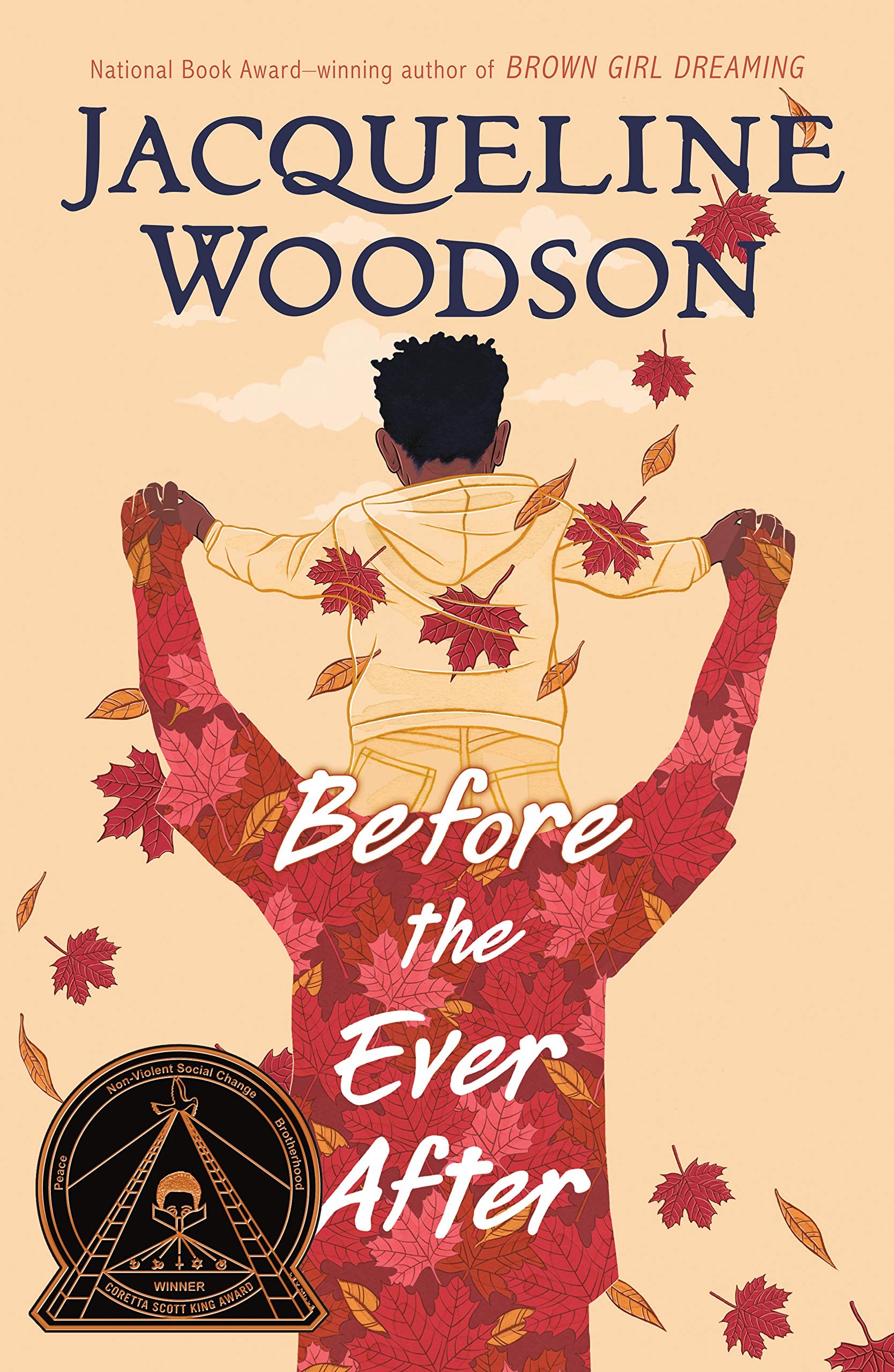
Before the Ever After: Woodson, Jacqueline: 9780399545436: Amazon.com: Books
Bibliography:
Woodson, Jacqueline. 2020. Before the Ever After. New York: Nancy Paulsen Books. 0399545433
 
Plot Summary:
For years, ZJ's dad has been everyone's favorite professional football player. His charismatic personality and talent on the field have made him a hero to his son, the neighborhood, and fans around the world. He is ZJ's role model and biggest fan. But suddenly something changes. He starts getting pounding headaches that won't go away. He is irritable and yells. He forgets words, places, memories, and people. ZJ and his mother watch on the sidelines while the person they love the most changes before their very eyes. As ZJ's dad's illness progresses, ZJ relies on his mom, his "boys," and his music to help him adjust to his new normal and hold on to his family unit.
 
Critical Analysis:
Before the Ever After is a relatively short novel in verse that lingers with the reader well beyond the last page. Set in 1999 and early 2000s, the story chronicles ZJ's emotional journey as he watches his father suffer from CTE (chronic traumatic encephalopathy), a then unknown illness after years of suffering concussions while playing professional football. Woodson's poetry sings on the page, jumping back and forth between vignettes that develop the plot and poems that focus on ZJ's feelings. The repetition, cadence, and tone of Woodson's poetry add to the authenticity of the novel inviting readers to experience the story right along with the characters.

ZJ's voice is pure as he narrates. It reads like a diary as he openly shares the confusion, hurt, and pain he is feeling. His authentic voice captures the fear of the unknown during this time for families of professional athletes. Many football players were experiencing similar symptoms but doctors did not have any answers. We see this authentic representation of the times throughout the novel when ZJ's dad is going to see another doctor for another treatment. As ZJ says, "Waiting. We're always waiting. Waiting for another doctor. Waiting for more tests. Waiting for test results. Waiting for new treatments" (Woodson 2020). His character is rich and complex, as are the minor characters of his father, mother, and friends.

In addition, the novel is rich in cultural details that reflect African-American experience. The dialogue between characters often includes words and phrases reflective of African-American culture including use of the word "Bruh" as a term of endearment and the phrase "just playing" to refer to joking around. ZJ also frequently takes pause throughout the novel to remember life with his dad before the headaches. He reflects on the bond they shared over music. His father used to say, "Make me a rhyme, little man" (Woodson, 2020) and ZJ would rap. The father-son duo would listen to hip-hop and create music together.  Music and language are used throughout the novel to show connections between the characters.
 
The story also shows an authentic experience of a Black family whose livelihood comes from professional sports. In one memory, ZJ's dad says, "What the house and the yard and the pool got to do with a guitar? Sometimes a parents going to give you something they wished they had when they were kids" (Woodson, 2020) ZJ's dad did not grow up with money, but his career allowed him to generously provide for his family. And while the family does have money and privileged now, the cost of that life has come at the expense of Zachariah Sr.'s physical and mental health. As his mind deteriorates and his career comes swiftly to an end, the family discovers their true friends. "We invited the people who keep coming around, the few friends who ask How are y'all doing and wait for our honest answers" (Woodson, 2020). While many people faded into the background of their lives, both ZJ and his mother have people to support and carry them through this difficult journey. ZJ's "boys" show up for him in every say and provide an unmatched support system for him.This cultural theme of friendship and the strength of extended family is repeatedly demonstrated throughout the novel. 
 
 
Review Excerpts & Awards: 

BOOKLIST (July, 2020) "Woodson again shows herself to be a masterful writer, and her meaningful exploration of concussions and head injuries in football, a subject rarely broached in middle-grade fiction, provides young athletes with necessary insights into sport's less glamorous side. In addition to this, it is a novel that explores family, mental illness, and the healing that a tight-knit, loving community can provide."
 
KIRKUS REVIEWS (July15, 2020) "Using spare and lyrical language for ZJ’s present-tense narration, which moves back and forth through time, Woodson skillfully portrays the confusion, fear, and sadness when a family member suffers from brain injury and the personality changes it brings. Readers see Zachariah Sr. through ZJ’s eyes and agonize with him as the strong, vibrant athlete begins to fade. The well-rounded secondary characters complete a mosaic of a loving African American family and their community of friends. The tale is set in the early 2000s, as awareness of chronic traumatic encephalopathy and its catastrophic consequences was beginning to emerge. A poignant and achingly beautiful narrative shedding light on the price of a violent sport."
  •  Coretta Scott King Author Award, 2021

 Curricular Connections:

  • Pair novel with a poetry lesson on poetic elements. Students use selected poems from the text to discuss figurative language, tone, and word choice.
  • Have students write a poem about a small moment in their life as modeled in the text.
  • Invite students to research more about chronic traumatic encephalopathy (CTE) and what changes have been made to football safety equipment since the disease was discovered.

Thursday, March 1, 2018

Winter Bees & Other Poems of the Cold

Winter Bees & Other Poems of the Cold
A Review by Amanda Kendall


Bibliography:
Sidman, Joyce. 2014. Winter Bees & Other Poems of the Cold. Ill. by Rick Allen. New York: Houghton Mifflin Harcourt Publishing Company. 0547906501

Plot Summary:
In this collection of winter poems, Joyce Sidman captures the winter months from beginning to end. The book commences with the tundra swans migrating before winter arrives, then explores the animals behavior throughout the cold months, and finally arrives at the onset of spring where the snow begins to thaw, and springtails bound from the snow to welcome the new season. Each one of the twelve poems captures a moment frozen in time during a forest winter and is accompanied by breathtaking illustrations and an informational paragraph that further explains the animal's instincts and adaptations.

Analysis:
Joyce Sidman is a masterful poet and storyteller.  This beautiful book is more than a collection of winter poems.  It encompasses a season. Each poem in the collection builds upon the next to tell the story of the creatures of the forest.  The twelve poems include a range of styles, some lyrical and some free verse, and cover a wide variety of topics from swans and snowflakes to moose and chickadees. The lyrical meter and rhyme presented in many of the poems give them a lovely sing-song quality. While the poems written in free verse like "Dream of the Tundra Swan" create a formidable yet elegant mood that perfectly pairs with the swan's own power and demeanor. The use of vibrant language and imagery throughout the collection brings the poems to life, while the use of alliteration and onomatopoeia entice the reader to read the poems aloud again and again. Each poem beautifully captures the essence of its subject in the style, mood, and word choice giving each part of the forest its own voice.

Rick Allen's intricate and exquisitely executed illustrations create depth and beauty to each poem.  From the opening page of the tree branch transitioning from fall to winter, to the same tree branch progressing into spring on the final pages, Allen's illustrations complete the story of the winter forest. The colors convey the beauty of the forest buried in snow, while highlighting the creatures that color the landscape with vibrant life even during these frozen months. Each poem is cleverly buried within the illustrations, allowing the poetry and the artwork to work together in perfect harmony. 

As an added bonus, each poem includes a snippet filled with information on the poem's subject including their adaptions and behaviors that help that not only survive but thrive during these cold winter months. The blend of poetry and information text is flawless in its delivery, encouraging readers of all ages to appreciate the beauty of the natural world presented in the text. The final inclusion of the glossary of scientific terms (and one poetry term) is another lovely addition for the inquisitive mind.

An absolute delight for all the senses from cover to cover, Winter Bees soars.

Awards & Reviews:
  • 2015 Claudia Lewis Poetry Award
  • ALSC Notable Children's Book
  • ILA Teacher's Choice Award
  • School Library Journal Best Book of 2014
  • Kirkus Best Book of 2014
  • The Bulletin Blue Ribbon Book
  • Chicago Public Library Best Book of 2014
  • New York Public Library's 100 Best Books for Reading and Sharing
  • 2014 Nerdy Poetry Award
From Publisher's Weekly: "Each poem brings a sense of humor, respect, or wonder to its subject..."

From Kirkus: "A work to be savored by young artists and scientists."

From School Library Journal: "Winter Bees distinguishes itself with a focus on the science of animal survival, coupled with superlative illustrations. Readers young and old will enjoy this winter journey and marvel at the wonders of nature."

Connections:
More Poetry Books by Joyce Sidman:
  • Swirl by Swirl: Spirals in Nature. 054731583X
  • Red Sings from Treetops: A Year in Colors. 0547014945
  • Dark Emperor and Other Poems of the Night. 0547152280
  • Butterfly Eyes and Other Secrets of the Meadow. 061856313X
  • Ubiquitous: Celebrating Nature's Survivors. 0618717196
More Poetry Books about Winter:
  • Florian, Douglas. Winter Eyes. 0688164587
  • Krantz, Julie. Sledding Down the Hill: Poems for Winter. 069263584X
  • Rogasky, Barbara. Winter Poems. Ill. Trina Schart Hyman. 0590428721
  • Yolen, Jane. Snow, Snow: Winter Poems for Children. 1590783468
Suggested Curricular Connections:
  • Create a winter scene out of torn construction paper. Add white tempera paint for snow. Display with a winter poem written by the child about winter.
  • Research one of the winter animals in the book to learn more about them.
  • Perform "Brother Raven, Sister Wolf" or "Big Brown Moose" as a class choral reading with assigned roles for the students.
  • Choose a scientific terms from a informational blurb in the book and create an acrostic poem.

bow wow meow meow

bow wow meow meow
A Review by Amanda Kendall


Bibliography:
Florian, Douglas. 2003. Bow Wow Meow Meow: It's Rhyming Cats and Dogs. San Diego: Harcourt Inc. 0152163956

Plot Summary:
This collection of twenty-one unique cat and dog poems includes a variety of styles of poetry that beg to be read aloud. Divided into two distinct sections, the animal poems consist of various breeds of household pets including the prideful bulldog and long-haired Persian as well as various members of the canine and cat families found in the wild. From the wild wolf and carnivorous lion to the spotted ocelot, each poem captures the unique and wonderful traits of the cat or dog.  

Analysis:
Douglas Florian has a knack for creating unique and surprising poems on any given topic. Bow Wow Meow Meow is a eclectic collection of poems and art that is filled with fun. Of the twenty-one poems included, many of the poems are short, only a few lines, and pair perfectly with the watercolor illustrations. Humorous word play and creative rhymes make these poems fun to read aloud over and over again.

His concrete poem on poodles, is not only visually stunning, but an auditory gem as well, with the repetition of "oodles and oodles" and the alliteration of  "whirls, while the whirls may have swirls." Another poem, "Dog Log" is particularly notable with it's carefully chosen words, witty rhyme, and beautifully paired illustration of a dog's brain broken into the most important dog thoughts. Although short in length, these canine and feline poems do not disappoint in depth. Each illustration extends the message of the poem, bringing the words to life in humorous and unexpected ways. The poems are deliberately centered on a page of white, while the illustrations consume the other page completely, directing the reader's eye first to the illustration, then to the poem, and finally back to illustration. This beautiful give and take in the layout of the book, engages the reader in thoughtful discourse while reading and enjoying these seemingly simple poems.

This collection showcases Florian's witty writing and his dynamic art perfectly. His zany personality comes through with each poem he writes using his talent for word choice, word play, rhythm and rhyme in each poem. A guaranteed crowd-pleaser for cat and dog lovers of all ages.

Awards & Reviews:
  • 2004-2005 Texas 2x2 Reading List
From Publisher's Weekly: "Florian fans will be delighted with another edition of his funny, punny poems about animals."

From Booklist: "In this winning collection, both clever and silly, Florian again shows how much fun poetry can be."

From School Library Journal: "This is a delightful selection to read aloud to younger children, and it offers older students models of simple poems that really work. A definite contender for "best in show."

Connections:
More Animal Poetry Books by Douglas Florian:
  • Beast Feast: Poems & Paintings.0152017372
  • Mammalabilia. 0152050248
  • Insectlopedia. 0152163352
  • Lizards, Frogs, and Polliwogs. 0152052488
  • In the Swim. 0152024379
More Poetry Books by Douglas Florian:
  • Poetrees. 1416986723 
  • Winter Eyes. 0688164587
  • Comets, Stars, the Moon, and Mars: Space Poems and Paintings. 0152053727
  • Laugh-eteria: Poems and Drawings. 0141309903
  • Poem Runs: Baseball Poems and Paintings. 0544456106
Suggested Curricular Connections:
  • Create a shared choral reading experience for kids with each poem. Add movement and bring the poems to life by reading them aloud together.
  • Invite children to write their own dog or cat poem. Compile the poems together to create a class poetry book.
  • Use oil pastels and water color paints to create abstract animal portraits like those shown in the book. 

Monday, February 26, 2018

Inside Out & Back Again

Inside Out & Back Again
A Review by Amanda Kendall


Bibliography:
Lai, Thanhha. 2011. Inside Out & Back Again. New York: Scholastic Inc. 0061962791

Plot Summary:
Based on author Thanhha Lai's own experiences as a refugee fleeing Vietnam after the fall of Saigon, Inside Out & Back Again is the story of ten-year-old Kim Ha leaving her home in search of hope.  For the first ten years of her life, Vietnam is all Ha has ever known - the lush foliage of the jungle, the explosive and beautiful taste of papaya in her mouth, and her family's traditions and love. However, when the war arrives just outside her door, her family is forced to board a ship and leave the only home she has ever known. Ha's family immigrates to Alabama and begins the daunting task of rebuilding their lives in a foreign land where life is so different. The new food, the people, and the language barrier all make settling into this new community more difficult. In a moving story of loss, change, and hope Ha and her family find strength in each other on their journey to find a new beginning.

Analysis:
Lai has expertly woven the truth of her own experiences with the fictional voice of her lovable and memorable Ha. Ha’s voice is fresh and fierce throughout the novel, filled with raw sentiment that captures the emotion of her journey. The reader feels Ha's love of her home and family, her fear of leaving everything behind, and her anger and frustration of being in world that she does not understand. Her emotions feel so personal and true throughout the novel that the reader can’t help but feel as though they have found a friend and confidant in Ha. Regardless of the readers own experiences, Ha is an honest, funny, and relatable character. 

Written in free verse with poems of only two or three pages in length, this story gives the reader a moving account of what it is like to be a refugee and immigrate to a new country filled with the unknown. The poetic structure of the novel enhances the emotional appeal of the story as each poem captures Ha’s mood and memories through all the ups and downs. You feel her joy, her frustration, and her triumphs. Her memories of beautiful Saigon and her beloved papaya are enhanced by the descriptive and figurative language. Her experiences at school with bullies and other children are honestly and heartbreakingly expressed in Lai’s careful word choice and text design. Each poem is crafted in a style and structure to evoke emotion and imagery for the reader. The repetition of poetic devices throughout the novel brings continuity to the story while the pacing of each poem highlights the emotions of the characters.

Through all the heartache, Lai sprinkles in plenty of humor along the way. She frequently mentioning the many wonky spelling and grammar rules in English language, showing Ha’s frustration at learning a new language in a playful and humorous way. This lightens the mood of the novel and creates a balance within truth found amongst these pages. Finally, the strength of family and love is also very strongly conveyed in this novel through Ha’s relationship with her brothers, the loss of her father, and her unwavering love and respect for her mother.

Lai expertly leads the middle grade reader through a harrowing experience with honesty, grace, and heart. Ha’s voice allows the reader to see the similarities far more than the differences between Ha and themselves, building empathy and understanding along the way. It’s an expertly crafted story filled with honesty and truth, carefully wrapped up in a lot of humor and love.

Awards & Reviews:
  • 2011 National Book Award for Young People's Literature
  • 2011 Newbery Honor Book
From Publisher's Weekly: "The taut portrayal of Ha’s emotional life is especially poignant as she cycles from feeling smart in Vietnam to struggling in the States, and finally regains academic and social confidence. An incisive portrait of human resilience."

From Kirkus: "An enlightening, poignant and unexpectedly funny novel in verse...In her not-to-be-missed debut, Lai evokes a distinct time and place and presents a complex, realistic heroine whom readers will recognize, even if they haven’t found themselves in a strange new country."

From School Library Journal: "All told, Inside Out and Back Again has the brevity of a verse novel packed with a punch many times its size."

Connections:
More Novels About Immigration and Refugees:
  • Applegate, Katherine. Home of the Brave. 0312535635
  • Gratz, Alan. Refugee. 0545880831
  • Park, Linda S. A Long Walk to Water: Based on a True Story. 0547577311
  • Pinkney, Andrea D. The Red Pencil. 0316247820
  • Ryan, Pam M. Esperanza Rising. 9780439120425
More Novels in Verse:
  • Alexander, Kwame. The Crossover. 0544107713
  • Alexander, Kwame. Booked. 0544570987
  • Applegate, Katherine. The One and Only Ivan. 0061992275
  • Applegate, Katherine. Home of the Brave. 0312535635
  • Creech, Sharon. Love That Dog. 0064409597
  • Creech, Sharon. Moo.  006241526
  • Engle, Margarita. Mountain Dog.1250044243
  • Pinkney, Andrea D. The Red Pencil. 0316247820
Suggested Curricular Connections:
  • Explore the many exotic fruits of the Vietnam including papayas, jack-fruit, and mango, and pomelo. Include a tasting opportunity for children.
  • Read in conjunction with other refugee novels in literature circles to compare the experiences, challenges, and perseverance of the characters.
  • Research the country of Vietnam to learn more about the country's landscape and culture. 
  • Discuss and brainstorm ways to make people feel welcome and valued when they are new to a school, a community, or a country.
  • Get involved with a local refugee center to find out how you can help others.
  • For more suggested activities, download the reader's guide here.