Showing posts with label award winner. Show all posts

Monday, December 6, 2021

Inclusive Lit: All the Way to the Top

  All the Way to the Top


A Review by Amanda Kendall

Bibliography:
Pimentel, Annette Bay. 2020. All the Way to the Top: How One Girl's Fight for Americans with Disabilities Changed Everything. Ill. by Nabi H. Ali. Naperville, Illinois: Sourcebooks explore. ISBN 1492688975
 
Plot Summary:
All the Way to the Top is a biographical picture book about Jennifer Keelan-Chaffins. Born with cerebral palsy, Jennifer knew the challenges facing everyone, but especially kids with disabilities. She was often made fun of and left out of things at school. At a very early age, she knew she wanted to make a difference. Together with her parents, Jennifer joined activists fighting for equal rights for disabled people. She joined protests, waved signs, and spoke at events. When she was eight, the American Disabilities Act had not been past yet. Jennifer joined others on the steps of the United States Capital, got out of of her wheel chair, and crawled up the steps to the capital in the famous Capital Crawl. Determined to represent the many children with disabilities, Jennifer's picture climbing the steps made the news and got people's attention. Finally, the American Disabilities Act was passed ensuring that "entrances would be rebuilt, sidewalks redesigned, and buses reengineered" (Pimentel 2020).
 
Critical Analysis:
Jennifer Keelan-Chaffins' story is an one of bravery, selflessness, and action. Pimentel and Ali tell her story well, capturing her determination and gumption through both the text and illustrations. Pimmentel delicately balances the text between important historical/biographical information and the gentle storytelling flow of a picture book. She uses repetition of STOP and GO throughout the book to draw the reader's attention to the obstacles Jennifer faced in the world and the determination she had to push through those challenges. The STOP and GO reference continue all the way to the end, when Pimentel cleverly changes it up by saying, "Jennifer has places to GO... AND NOTHING WILL STOP HER NOW" (Pimentel 2020). Written for a younger audience, Pimmentel also weaves in explanations of the American Disabilities Act and the activists behind the disabilities equality movement, giving readers important information about a topic that is likely brand new to them when reading the book.  
 
Ali's illustrations are large, colorful, and bold. The illustrations are inclusive and diverse, including people with a range of skin tones and an array of different disabilities throughout the book. All characters are drawn with care, honoring the difference in people and avoiding any stereotypes or misrepresentations. Some images have a dark or grey background with the illustration of Jennifer in full color toward the front. This draws the reader's eye to Jennifer, highlighting the importance of her journey in activism, but in doing so also blends all the other disabled activists into the background missing the mark for giving a voice to a group of people who have often been overlooked or left out. 

All the Way to the Top is sure to inspire young readers to get involved in activism. The foreword written by Jennifer Keelan-Chaffins invites readers to get involved from the very first page, saying "I hope that by sharing my story, kids everywhere will see that you don't have to be a grown-up to make a difference. If you believe in something, say it loud for everyone to hear!" Unlike most picture books the forward is not squeezed between the title page and the first page of the story. The forward is strategically printed on the left hand side of the first page of the story, making sure it is easily seen by every reader who picks up the book. Finally, Pimentel includes an informational section and timeline at the end of the book, giving readers additional information on disabilities, the fight for equality, the Capital Crawl, and more. She also includes the original photograph of Jennifer making the climb in 1990. The timeline includes major milestones of the Disability Rights Movement paired with important events from Jennifer's life. The extras in the book are sure to peak the interest of young readers and will likely lead to additional questions and research on this important topic and movement.

Review Excerpts & Awards: 

BOOK LIST (February 1, 2020) "The book’s informative back matter includes concise explanations of topics mentioned in the text. Pimentel’s compelling, present-tense narrative gives the story great immediacy, helping children connect with Jennifer’s reactions to physical barriers and social injustice. Making good use of color, light, and contrast, Ali contributes a series of expressive digital illustrations. Still an activist, Jennifer Keelan-Chaffins offers a thought-provoking foreword to this inspiring picture book."
 
SCHOOL LIBRARY JOURNAL (February 1, 2020) "Pimental's present tense writing and portrayal of the power of a young person fighting to create change will engage young audiences. A few illustrations do not visually match the content of the text. A foreword and back matter enhance understanding. The time line that is provided might cause readers to seek extra information to fully understand specific milestones. VERDICT Even with a few quibbles, Pimentel offers a great look at a young activist creating change and a better understanding of the importance of the ADA"
  • Schneider Family Book Honor, 2021

 Curricular Connections:

  • Do some research. What are somethings that changed with the passing of the American Disabilities Act? How did the ADA help people with different disabilities?
  • Activists are speaking out on many different topics. Invite students to learn about other areas of activism that might interest them.

Sunday, December 5, 2021

Inclusive Lit: When Aiden Became a Brother

  When Aidan Became a Brother


A Review by Amanda Kendall

Bibliography:
Lukoff, Kyle. 2019. When Aidan Became a Brother. Ill. by Kaylani Juanita. New York: Lee & Low Books. ISBN 1620148374
 
Plot Summary:
As a young child, Aiden hated the sound of his name and the clothes that he wore. It was more than being a different kind of girl, Aiden didn't feel like a girl at all. He was a boy. Aiden shared his truth with his parents and together they learned, adjusted, and fixed the parts of Aiden's life that didn't feel true to him. When Aiden's mother becomes pregnant, Aiden wants to be the best big brother but worries that, like him, the baby might feel misunderstood. He sets out to find a name that will "fit this new person no matter who they grew up to be" (Lukoff 2019).  He practices reading to the baby. He paints the baby's room with his father. But no matter what he does, he can't shake his worry. Aiden finally talks to his mother. She reassures him that mistakes might be made, but mistakes can be fixed and that the best way to be a big brother is "to love someone for exactly who they are" (Lukoff, 2019).

Critical Analysis:
When Aiden Became a Brother is a beautiful story of acceptance, love, and family. Lukoff writes with care and love, as he tells Aiden's story and explores Aiden's worries about becoming a big brother. The text is straightforward and clear from the beginning, explaining how Aiden did not feel like a girl, but rather "another kind of boy" (Lukoff 2019) and how his family "learned a lot from other families with transgender kids" (Lukoff 2019). As the story continues, Lukoff shows how Aiden's anxiety about the upcoming baby is heavily impacted by the gender stereotypes in the world. The reader sees how gender assumptions and questions make him uncomfortable and how his parents navigate this situations to make Aiden feel at ease. Lukoff uses Aiden's parents as a positive example of how to change the narrative of the dominant culture an counter gender bias. When asked if she is having a boy or a girl, Aiden's mother responds that she is "having a baby" (Lukoff 2019). Aiden and his family show how focusing on the person, rather than a gender, and loving someone for who they are is the most important thing we can do. 

Kaylani Juanita's busy and vibrant illustrations pair perfectly with the text. Each double page spread captures Aiden's emotional journey. Juanita's facial expressions of the characters convey a range of strong emotions from anger, pride, and worry to unconditional love and acceptance. The details on each page show impeccable attention to detail and expand on the text. This is particularly true on the pages that show Aiden's first room and his second room. The first room has broken princess items on the floor and drawings of nature on the easel and notebook paper. The second room is filled with plants and nods to nature and the dress Aiden's mother was holding on the first page is now being used as a flag on a walking stick. Several items remain the same, like the fluffy chair and white rabbit, but many items have been replaced or repurposed to belong in Aiden's new space. Nature continues as a theme throughout the illustrations. For example on the page where Aiden is trying to find possible baby names, he is looking for something to "fit the new person no matter who they grow up to be" (Lukoff 2019), so he looks to nature for inspiration coming up with names like moss, rain, river, forest, and sky. Many pages are filled with text and art blending the words perfectly in the background or within the images leaving very little white space throughout the book. This format weaves the text with the pictures, using both mediums and the complete page to tell Aiden's story. Each digitally rendered illustration beautifully captures the mood and message of Lukoff's words and Aiden's journey.
 
Lukoff and Juanita have created a book that celebrates families, love, and the beautify of being true to yourself. Lukoff's note to readers at the back of the book explains how Aiden's story connects with everyone whether it's through the anxiety of becoming an older sibling or feeling like you don't belong. Void of stereotypes and gender assumptions, When Aiden Becomes a Big Brother proves how important and necessary books that represent the LGBTQ+ community are for ALL readers.

Review Excerpts & Awards: 
 
HORN BOOK GUIDE (Fall 2019) "Brown-skinned (possibly biracial) Aidan, who's transgender, knows how it feels to be misunderstood, so he wants to get things right for his new sibling. Lukoff's straightforward approach to Aidan's gender transition rings with authenticity, and he puts the child-centered story ahead of message. Celebrating the family's close, affirming relationship, Juanita's vibrant digital illustrations take cues from the text, which models how to avoid the male/female binary."
 
KIRKUS REVIEWS (April 1, 2019) "Lukoff breaks away from binary language and stereotypical gender roles, highlighting within the text and in an author’s note that there is more than one way to be a person of any gender. The hopeful message at the end emphasizes love and the importance of staying open to learning. Joyful and affirming, Aidan’s story is the first of its kind among books for welcoming a new baby."
  •  Stonewall Book Award, 2020

 Curricular Connections/Books for Further Reading:

  • Brown, Peter. Fred Gets Dressed. 0316200646
  • Herthel, Jessica. I Am Jazz. 0803741073
  • Love, Jessica. Julian is a Mermaid. 0763690457
  • Lukoff, Kyle. Call Me Max. 147886897X
  • Pearlman, Robb. Pink is for Boys. 0762462477
  • Thorn, Theresa. It Feels Good to be Yourself: A Book About Gender Identity. 1250302951

Sunday, November 14, 2021

Asian Pacific American Lit: Grandfather's Journey

 Grandfather's Journey

Grandfather's Journey: Say, Allen: 8601423420011: Amazon.com: Books

A Review by Amanda Kendall

Bibliography:
Say, Allen. 1993. Grandfather's Journey. Boston: Houghton Mifflin Company. ISBN 0544050509
 
Plot Summary:
When Allen Say's grandfather was a young man he left Japan and went to explore the world. He traveled by boat, train, riverboat, and foot. He saw the oceans, fields, mountains, and rivers, but his favorite place was California. Say's grandfather settled in California, returning to Japan to marry and then choosing to raise his family in San Fransisco. When his daughter was a young woman, he returned to Japan with his family and found solace in his old friends and childhood mountains and rivers. Eventually, the grandfather's daughter got married and Allen was born. Allen grew up spending time with his grandfather and hearing stories of his travels. Although Grandfather never returned to California, Allen did and found a lasting connection with his grandfather: the feeling of home in both countries.

Critical Analysis:
Allen Say's delightful tribute to his grandfather celebrates his life and his experiences as an American immigrant. The text is is beautifully crafted, yet clear and concise. Each page has a sentence or two that pauses at the important life milestones of his grandfather. Broad transitions are used to show the passage of time. For example, Say writes "After a time, he returned to his village in Japan to marry his childhood sweetheart. Then he brought his bridge back to his new country" (1996).  There is no way to measure the amount of time Say's grandfather remained in any one place, but rather that he was there and then he moved on. Delicately balanced to include the moments in life, the beauty of the world traveled, and the reflection of the life's journey, the text thoughtfully walks the reader through Grandfather's life.
 
Say's gorgeous illustrations are powerful and calming. Each illustration is outlined with a black border framing the illustration in simple elegance. The soft color palette, curved shapes, and inclusion of landscape images create gentle images throughout the book.  Many of the illustrations are portraits that frame Say's grandfather and family in a moment in time much like a photograph. The people are posed exactly as they would have been in a photograph from that era. One of the most impressive aspects of the illustrations is the accuracy and historical context of each one. For example, in the illustration of Say's mother as a young girl she is seen with a blonde hair, blue eyed doll, showing her access to American cultural toys rather than a doll that represented her cultural heritage or family. This subtle inclusion of the baby doll is an excellent example of how Say includes some of the realities of being a Japanese American. 
 
Cultural markers are beautifully woven into the illustrations and simple elegance of the story.  The characters presented are authentic in appearance, dress, and cultural representation. The first page introduces Say's grandfather in traditional Japanese attire, and then shows his change to European clothes for the journey to America. The first time in European clothes, he is pictured in a too large coat and awkwardly holding his hat, showing how he is uncomfortable in this change but bravely taking it on. In the pages that follow, the clothes are a better fit illustrating how Say's grandfather has found his place in America. We see similar cultural markers with clothing throughout the book. Say's mother is shown as a young woman in both an American style dress and hat when arriving in Japan and then in a Japanese kimono for her wedding. By showing characters in both styles of clothing, the reader understands how they are a part of each culture.

Themes of immigration, family, and nature are strong throughout the memoir. Say's grandfather is drawn to the beauty of the world and he is continually amazed by the splendor of the mountains and oceans. Whether in Japan or California, his appreciation and love of nature is apparent. Family is another strong theme throughout the story. Many of Say's grandfather's decisions in life were made with family in mind. He returns to Japan to marry is childhood sweetheart. He moves to a larger city in Japan to accommodate his San Fransisco born daughter. Family is a guiding force for his life decisions. Not only is Say sharing his grandfather's immigration story, but also his own. Mirroring his grandfather's love of adventure, Say immigrates to the United States and finds a home in California while keeping his ties to his home in Japan. Here, Say captures the immigrants experience of being a part of two different worlds and finding they are both a strong part of their identity saying, "The funny thing is, the moment I am in one country, I am homesick for the other" (Say 1996).


Review Excerpts & Awards:   
 
PUBLISHER'S WEEKLY (August 16, 1993) "Say transcends the achievements of his Tree of Cranes and A River Dream with this breathtaking picture book, at once a very personal tribute to his grandfather and a distillation of universally shared emotions. Elegantly honed text accompanies large, formally composed paintings to convey Say's family history; the sepia tones and delicately faded colors of the art suggest a much-cherished and carefully preserved family album."
 
SCHOOL LIBRARY JOURNAL (September 1993) "A personal history of three generations of the author's family that points out the emotions that are common to the immigrant experience. Splendid, photoreal watercolors have the look of formal family portraits or candid snapshots, all set against idyllic landscapes in Japan and in the U.S."
  •  Caldecott Medal, 1994

 Curricular Connections:

  • Say shares a story from his family's history. Invite students to interview an older relative about their childhood and/or younger years. Encourage students to learn more about their family history.
  • Birds are an important symbol used throughout the book. Say's grandfather keeps warblers and silver eyes when living in Japan and other various songbirds while living in America. Conduct some research about birds local to the area in which you live. What types of songbirds live in your area?

Monday, November 1, 2021

Native American Lit: Crossing Bok Chitto


 Crossing Bok Chitto:

A Choctaw Tale of Friendship & Freedom

A Review by Amanda Kendall
 Crossing Bok Chitto: A Choctaw Tale of Friendship & Freedom: Tingle, Tim,  Bridges, Jeanne Rorex: 9781933693200: Amazon.com: Books
Bibliography:
Tingle, Tim. 2006. Crossing Bok Chitto: A Choctaw tale of friendship & freedom. Ill. by Jeanne Rorex Bridges. El Paso, Texas: Cinco Puntos Press. ISBN 0938317776
 
Plot Summary:
In the early nineteenth century, there was a river in Mississippi called Bok Chitto. The river separated the Choctaw Nation and American plantation owners and the enslaved people who lived there. The river acted as a border if an enslaved person made it across the river, they were considered free. 
 
Martha Tom, a young Choctaw girl, was sent by her mother to find blackberries. When she couldn't find any on the Choctaw's side of the river, she crossed. On the other side she found both blackberries and dozens of enslaved people attending the forbidden slave church. She was quickly discovered and escorted home by a young enslaved boy, Little Mo. Although they were from different sides of the river, the two became fast friends. When Little Mo's mother is sold from the plantation, he suggests to his family that they cross Bok Chitto to get to freedom. Desperate to save his family, Little Mo goes to Martha Tom for help. Martha organizes all the women in the village bring a candle to the river while dressed in white. Looking like angles, the Choctaw women distract the guards and bring Little Mo and his family safely across the river to freedom.
 
Critical Analysis:
 As a member of the Choctaw Nation, Tingle tells the story of Crossing Bok Chitto with honesty and authenticity. In his author's note he states that, "We Choctaw live by our stories" (Tingle 2006). This natural ability to tell a good story comes across on each page. There is a casual note to the narration that adds to the storytelling experience and makes the story accessible and engaging for all ages. 
  
Tingle's story is captivating from the beginning, explaining the significance of a single river and the power of crossing it. As the story unfolds, each character shows both fear and courage as they trust each other with their lives. The friendship developed between Little Mo and Martha Tom develops naturally, clearly showing respect for the other's culture. Tingle shows this mutual appreciation through the story. First when Little Mo visits the Choctaw side of the river and hears old men chanting. He says "it touched him deeply." And when Martha Tom starts attending church every Sunday to listen to the preacher and sing songs.
 
Bridges's illustrations aptly pair with the storytelling style of the text. The illustrations capture the  sweet yet somber mood of the story with muted colors and blurry backgrounds. Skin tones, clothing, and hairstyle and structure all reflect cultural and historical authenticity. In the image of Martha Tom and Little Mo crossing the hidden rocks in the river, the reader is drawn to the authentic Choctaw shoes while Little Mo is seen barefoot and in torn pants. The entirety of the story takes places outside and Bridges's illustrations are a beautiful blend of natural colors and hues. Finally, Bridges's captures the emotions of the characters fully with her expressive faces throughout the story. Many pages feature large full front portraits of characters, highlighting their emotions throughout the story. She elegantly captures the pain and sorrow of Little Mo and his family, as well as the determination and strength of the Choctaw women who come to the family's aid. 

Themes of family, empathy, friendship, and bravery ring true throughout the book. Tingle and Bridges have collaborated to create a tale that honors and celebrates the many different Native Nations that helped enslaved people find freedom (Tingle 2006). Cultural markers are embedded throughout the story and naturally incorporated into the illustrations. Tingle includes lyrics to Choctaw songs as they are still sung today, "Way, hey ya hey ya" (Tingle 2006) and includes a song from the forbidden slave church translated into Choctaw. All of these elements, plus the after notes at the end of the book provide the reader with the most authentic experience learning about the Choctaw in the past and today. Tingle's note links the past with the present, as the Choctaw Nation remains large, prosperous, and strong with a natural inclination to tell a good story (Tingle 2006).

Review Excerpts & Awards: 

BOOKLIST (April 15, 2006) "In a picture book that highlights rarely discussed intersections between Native Americans in the South and African Americans in bondage, a noted Choctaw storyteller and Cherokee artist join forces with stirring results...In her first paintings for a picture book, Bridges conveys the humanity and resilience of both peoples in forceful acrylics, frequently centering on dignified figures standing erect before moody landscapes."
 
SCHOOL LIBRARY JOURNAL (July 1, 2006) "Tingle is a performing storyteller, and his text has the rhythm and grace of that oral tradition. It will be easily and effectively read aloud. The paintings are dark and solemn, and the artist has done a wonderful job of depicting all of the characters as individuals, with many of them looking out of the page right at readers. The layout is well designed for groups as the images are large and easily seen from a distance. There is a note on modern Choctaw culture, and one on the development of this particular work. This is a lovely story, beautifully illustrated, though the ending requires a somewhat large leap of the imagination."
  • American Indian Youth Literature Award, 2008
  • ALA Notable Children's Books, 2007
  • Bluebonnet Award Nominee, 2008-2009

 Curricular Connections:

  • Tim Tingle writes "modern business and traditional culture live comfortably side-by-side" when describing the life of the Mississippi Choctaw today. Research more on the Choctaw tribe to learn what traditions endure today.

Saturday, October 30, 2021

Native American Lit: Birdsong

Birdsong

A Review by Amanda Kendall
Birdsong (picture book) - Wikipedia

Bibliography:
Flett, Julie. 2019. Birdsong. Vancouver: Greystone Books. ISBN 1771644737
 
Plot Summary:
In the span of a year, Katherena's life changes dramatically. In the spring, she moves with her mother from a house by the sea to a new home in the country. In the summer, her mother encourages her to go visit their older neighbor, Agnes whom Katherena instantly bonds with over a love of art and creating. In the fall, Katherena visits Agnes again and again, each visit bringing the two friends closer. In winter, Agnes gets sick and Katherena brings her salmon soup. When spring rolls around again, Katharena visits her friend to bring the beauty of nature to Agnes's bedroom.The two talk about art and enjoy the silence of each other's company. When Katherena leaves she reflects on how privileged she is to have Agnes as a friend.

Critical Analysis:
Julie Flett's talent for storytelling and creating are exquisitely showcased in Birdsong. A Cree-Metis author and illustrator, Flett shares her cultural background throughout the picture book. The thoughtful text sets a slower pace for this read and creates a reflective mood throughout the story. Simple sentences are expertly crafted to paint images in the readers mind and evoke emotion. For example in the line "It's a murky spring morning as we pack up the last of our belongings and leave our little home in the city by the sea" (Flett 2019) the words are simple enough, but the imagery is strong and the sadness of the character palatable. Strong descriptive words and meaningful dialogue move the story along at just the right pace showing the passing of time in both the everyday and the friendships developed over time.
 
Flett's pastel and pencil illustrations are soft and emotional. The natural colors and textures compliment the mood of the text. The earthy tones match the story's seasonal structure and bring a sense of calm and order to the story. In addition to the use of natural tones, Flett includes other authentic cultural markers throughout the text. Her characters are authentically represented in skin tone and show the everyday life of someone sharing her culture. The illustrations have a strong focus on nature and the natural order that nature brings to the world. The color tones, textures, and soft sometimes blurry lines, create soothing images. Flett focuses on birds throughout the illustrations, including a different species on almost every page. At times, the birds are the focus of the illustration as when the geese fly south for winter and other times they are subtly included sitting in a tree outside a window. The story and birds come full circle in the end when Katherena's drawings of each bird are put up around Agnes's room. Beautifully crafted, each illustration enhances the story and impresses the importance of connection to nature and creativity.
 
Cultural markers of the Cree-Metis people can be found flawlessly woven into the text. Authentic names are used for characters like Katharena and her dog, Ôhô which means owl in Cree. Katharena also tells Agnes about the Cree seasons, explaining that the current month "is called pimihâwîpisim - the migrating moon" (Flett, 2019). Katharena sleds on a toboggan and makes salmon soup to take to her friend. These small details help paint a beautiful authentic picture of a young Cree girl who has found a true friend in her neighbor.
 
Ultimately, Birdsong is a celebration of friendship. The friendship that develops between Katharena and Agnes shows how friendships can develop through shared interests regardless of age. It is the art and act of creating things that brings them together. Strong themes of nature, friendship, the passage of time, and finding beauty in the small moments all make this book a charming book about life.

Review Excerpts & Awards: 

PUBLISHER'S WEEKLY (September 30, 2019) "Cycling from spring to spring, Flett's subtle, sensitive story delicately traces filaments of growth and loss through intergenerational friendship, art making, and changing moons and seasons. Cree-Métis words (defined in a small glossary) add an intimate layer of identity to the child’s lustrous narration, which shines against the spare beauty of rich illustrations by Flett (who is Cree-Métis)"
 
KIRKUS REVIEWS (July 1, 2019) "Flett’s simple story explores the difficulties of moving but also shows young readers how new friends can sometimes ease them; that this friendship is an intergenerational one between fellow artists is an especially sweet touch. Flett (Cree/Métis) employs her characteristically minimalist style, placing Katherena against flat expanses of greensward that changes with the seasons, birds wheeling above in silhouette. Katherena and her mom both have brown skin and straight, black hair; Agnes has brown skin as well, but she does not speak Cree. Emotionally stunning.
  • Winner of the TD Canadian Children's Literature Award, 2020
  • American Indian Youth Literature Honor Title, 2020
  • A Boston Globe - Horn Book Honor Book
  • Best Book of the Year: Publisher's Weekly, School Library Journal, Kirkus, Horn Book, Quill & Quire, Globe and Mail

 Curricular Connections:

  • Seasons are an important element of the book. Have students create a collage of their favorite season using a variety of materials and textures.
  • Friendship is an important theme in Birdsong. Discuss what makes a good friend using examples from the book and create an anchor chart for reference.
  • Moving to a new place is difficult. Pair this text with Evelyn Del Rey is Moving Away by Meg Medina to explore how friendships may change and develop during this transitional time. 
  • Create a character change visual using a circle divided into 4 equal parts to show how Katherena changes throughout the year, season by season.

Sunday, September 26, 2021

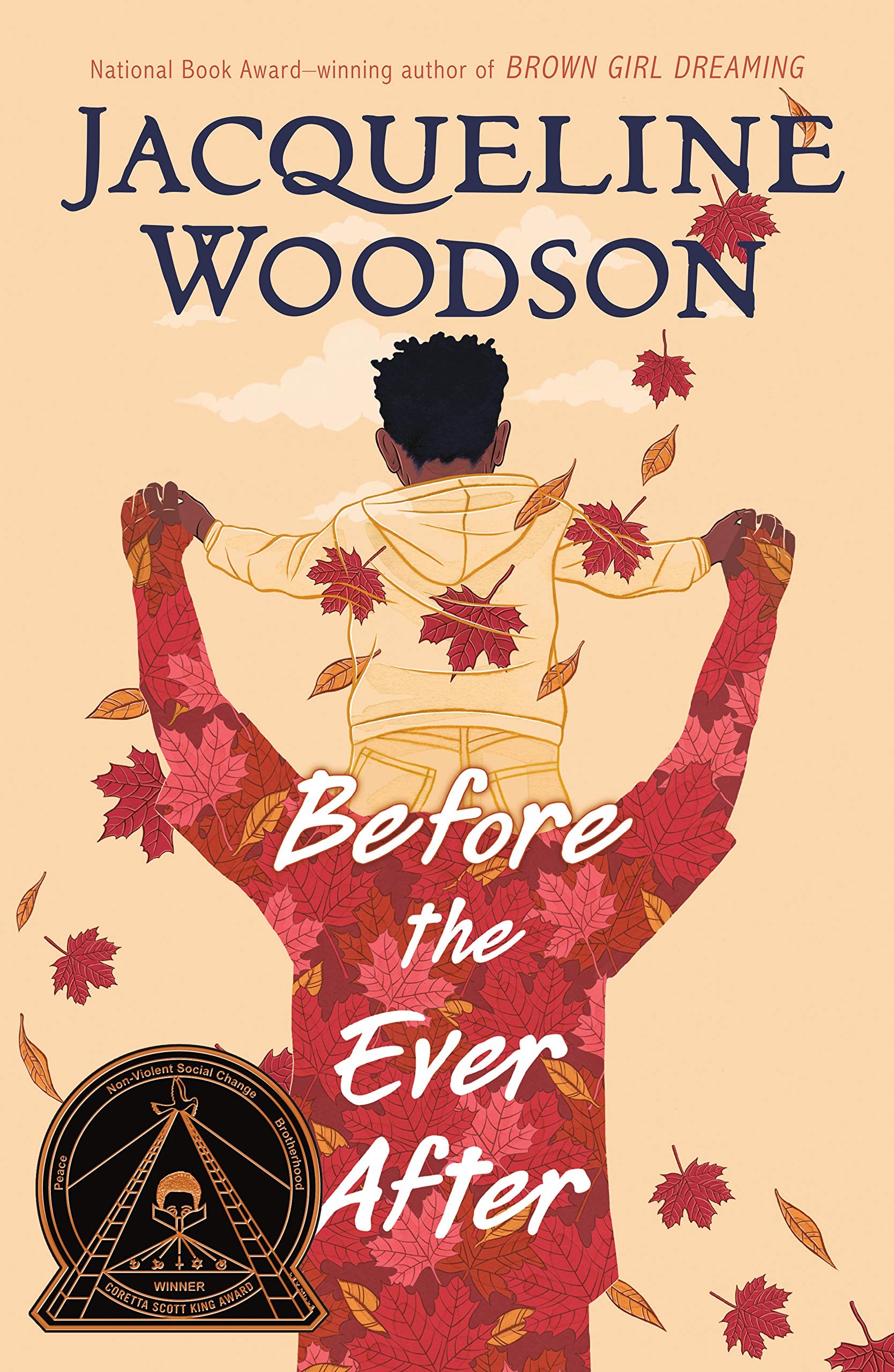
African-American Lit: Before the Ever After

Before the Ever After

A Review by Amanda Kendall
 
Before the Ever After: Woodson, Jacqueline: 9780399545436: Amazon.com: Books
Bibliography:
Woodson, Jacqueline. 2020. Before the Ever After. New York: Nancy Paulsen Books. 0399545433
 
Plot Summary:
For years, ZJ's dad has been everyone's favorite professional football player. His charismatic personality and talent on the field have made him a hero to his son, the neighborhood, and fans around the world. He is ZJ's role model and biggest fan. But suddenly something changes. He starts getting pounding headaches that won't go away. He is irritable and yells. He forgets words, places, memories, and people. ZJ and his mother watch on the sidelines while the person they love the most changes before their very eyes. As ZJ's dad's illness progresses, ZJ relies on his mom, his "boys," and his music to help him adjust to his new normal and hold on to his family unit.
 
Critical Analysis:
Before the Ever After is a relatively short novel in verse that lingers with the reader well beyond the last page. Set in 1999 and early 2000s, the story chronicles ZJ's emotional journey as he watches his father suffer from CTE (chronic traumatic encephalopathy), a then unknown illness after years of suffering concussions while playing professional football. Woodson's poetry sings on the page, jumping back and forth between vignettes that develop the plot and poems that focus on ZJ's feelings. The repetition, cadence, and tone of Woodson's poetry add to the authenticity of the novel inviting readers to experience the story right along with the characters.

ZJ's voice is pure as he narrates. It reads like a diary as he openly shares the confusion, hurt, and pain he is feeling. His authentic voice captures the fear of the unknown during this time for families of professional athletes. Many football players were experiencing similar symptoms but doctors did not have any answers. We see this authentic representation of the times throughout the novel when ZJ's dad is going to see another doctor for another treatment. As ZJ says, "Waiting. We're always waiting. Waiting for another doctor. Waiting for more tests. Waiting for test results. Waiting for new treatments" (Woodson 2020). His character is rich and complex, as are the minor characters of his father, mother, and friends.

In addition, the novel is rich in cultural details that reflect African-American experience. The dialogue between characters often includes words and phrases reflective of African-American culture including use of the word "Bruh" as a term of endearment and the phrase "just playing" to refer to joking around. ZJ also frequently takes pause throughout the novel to remember life with his dad before the headaches. He reflects on the bond they shared over music. His father used to say, "Make me a rhyme, little man" (Woodson, 2020) and ZJ would rap. The father-son duo would listen to hip-hop and create music together.  Music and language are used throughout the novel to show connections between the characters.
 
The story also shows an authentic experience of a Black family whose livelihood comes from professional sports. In one memory, ZJ's dad says, "What the house and the yard and the pool got to do with a guitar? Sometimes a parents going to give you something they wished they had when they were kids" (Woodson, 2020) ZJ's dad did not grow up with money, but his career allowed him to generously provide for his family. And while the family does have money and privileged now, the cost of that life has come at the expense of Zachariah Sr.'s physical and mental health. As his mind deteriorates and his career comes swiftly to an end, the family discovers their true friends. "We invited the people who keep coming around, the few friends who ask How are y'all doing and wait for our honest answers" (Woodson, 2020). While many people faded into the background of their lives, both ZJ and his mother have people to support and carry them through this difficult journey. ZJ's "boys" show up for him in every say and provide an unmatched support system for him.This cultural theme of friendship and the strength of extended family is repeatedly demonstrated throughout the novel. 
 
 
Review Excerpts & Awards: 

BOOKLIST (July, 2020) "Woodson again shows herself to be a masterful writer, and her meaningful exploration of concussions and head injuries in football, a subject rarely broached in middle-grade fiction, provides young athletes with necessary insights into sport's less glamorous side. In addition to this, it is a novel that explores family, mental illness, and the healing that a tight-knit, loving community can provide."
 
KIRKUS REVIEWS (July15, 2020) "Using spare and lyrical language for ZJ’s present-tense narration, which moves back and forth through time, Woodson skillfully portrays the confusion, fear, and sadness when a family member suffers from brain injury and the personality changes it brings. Readers see Zachariah Sr. through ZJ’s eyes and agonize with him as the strong, vibrant athlete begins to fade. The well-rounded secondary characters complete a mosaic of a loving African American family and their community of friends. The tale is set in the early 2000s, as awareness of chronic traumatic encephalopathy and its catastrophic consequences was beginning to emerge. A poignant and achingly beautiful narrative shedding light on the price of a violent sport."
  •  Coretta Scott King Author Award, 2021

 Curricular Connections:

  • Pair novel with a poetry lesson on poetic elements. Students use selected poems from the text to discuss figurative language, tone, and word choice.
  • Have students write a poem about a small moment in their life as modeled in the text.
  • Invite students to research more about chronic traumatic encephalopathy (CTE) and what changes have been made to football safety equipment since the disease was discovered.

Sunday, September 12, 2021

International Literature: Soldier Bear

Soldier Bear

A Review by Amanda Kendall


Bibliography:
Tak, Bibi Dumon. 2013. Soldier Bear. Illustrated by Philip Hopman. Translated by Laura Watkinson. Grand Rapids, Michigan: Eerdmans Books for Young Readers. ISBN 978-0802854360
 
Plot Summary:
In the midst of World War II, a very unexpected friendship develops. The story begins when a group of Polish soldiers discover a young boy with a Syrian brown bear cub in his bag. Concerned that he will end up in a circus or worse, the soldiers trade a penknife for the cub. They load him in the truck and return to camp with their new friend. The bear, named Voytek, quickly wins over the Commander and is allowed to stay with the unit. For the next five years, Voytek travels with the unit through multiple countries winning the hearts of all those he meets. He becomes a friend, a mascot, and a fellow soldier to the entire unit. He joins them on missions and even carries ammunition. His silly antics and lovable personality keep up the morale of the entire unit and help the soldiers cope with the harsh realities of war. This is not a story about war, but rather a story of friendship between some soldiers and a remarkable bear.

Critical Analysis:
Originally published in the Netherlands, Soldier Bear tells the story of one bear who brought joy to many during a dark and difficult time. Tak blends historical fact with relatable storytelling flawlessly to craft a compelling tale for younger audiences. The first few chapters offer the background of how this unlikely group of friends came together including Voytek (the bear) and Peter, Stanislav, Janusz, Pavel, and Lolek (the Polish soldiers). Each subsequent chapter tells Voytek's story highlighting his escapades around camp, his ongoing feud with Kaska (a monkey), and his loyalty to his friends. Tak's writing is clear and relatable, perfect for younger audiences. By centering Voytek in the story, Tak tells a unique piece of history without the need for extensive background knowledge of World War II or the Polish Armed Forces. He is able to share difficult truths about war in age appropriate ways through the soldiers experiences and memories mixed with Voytek's silliness. Voytek keeps the story light. His antics bring joy and laughter to his unit and the reader alike.

Hopman's soft pencil illustrations compliment the text throughout the novel. From the small bear sketches in the corners of pages to full page drawings of important events, Hopman's subtle style of art brings the story to life. Maps showing the movement of characters throughout the story are also included. Both the illustrations and maps support young readers with their understanding of the story in subtle yet effective ways.
 
Tak and Hopman are both from the Netherlands, but the main characters in this story are Polish.  All the characters, Voytek included, are portrayed as genuine people and friends. They do not always get along and tease each other frequently, but they also demonstrate loyalty to each other and their beloved bear. Although the setting of the story is mostly Pakistan and Italy, the Polish culture surrounds these characters. Polish names are used throughout the story and although the soldiers are part of a British army unit, they give their bear cub a Polish name - Voytek, meaning smiling warrior. Poland is also world famous for their vodka and it serves as an important Polish cultural marker within the story. As a cub, Voytek drinks his milk out of vodka bottle regularly. He is also given a large amount of vodka before he meets the C.O. of the first camp so he will appear docile and cute. He ends up drunk and acting quite silly, but still wins over the C.O. and is allowed to stay. Tak maintains the Polish identify of the soldiers is throughout the story. 
 
The book did not include a list for further reading or a list of references used to write the story. As a narrative based on historical events, copious amounts of research must have been done to write the story with authenticity. I was disappointed that none of these resources were included.

Review Excerpts & Awards: 
 
BOOKLIST (October 15, 2011) "Tak offers an engaging story of grown-up protagonists and situations, focusing on Voytek's exploits and his interactions with a menageries of other animals. Hopman's expressive grease-pencil illustrations add to the story's accessibility, grounding the proceedings with charm."

KIRKUS REVIEWS (August 15, 2011) "Funny, fresh and heartwarming, it doesn't ignore the horrors of war but concentrates on the joy of having an animal friend, albeit a difficult one. Readers of any age do no to know anything about the complicated history of the Polish free forces or even World War II to enjoy this tale of 'a friend and a mascot who made the war easier to bear.'"
  • Mildred L. Batchelder Award Winner, 2012
  • USBBY Selection, 2012
  • ALA Notable Children's Book, 2012

Curricular Connections: 

  • Create a poster advertisement for Voytek at the Edinburgh Zoo. Encourage students to include Voytek's special skills, background, and history on the poster. 
  • Voytek was never forgotten because his image was added to his unit's logo. Design a new logo for the Polish unit that includes Voytek and other elements from the story.
  • Pair with an informational text on Syrian brown bears. Have students work in groups to learn more about Syrian brown bears including their physical characteristics, habitat, and status as an endangered animal. 
  • Voytek was friends with a variety of other animals including a monkey and a dalmatian. Pair with other texts, like Owen & Mzee, to read about other unexpected animal friendships. 

Sunday, April 15, 2018

Lily's Crossing

Lily's Crossing
A Review by Amanda Kendall


Bibliography:
Giff, Patricia Reilly. 1997. Lily's Crossing. New York: Random House Inc. 0440414539

Plot Summary:
Lily always spends her summers in Rockaway Beach, New York with her grandmother and father, Poppy. That is until the summer of 1944. Her best friend, Margaret, moved to Detroit with her family, and her father was called overseas. While the war continues in Europe, Lily finds herself with only her grandmother for company on summer vacation and without her beloved father and best friend. With her life turned upside down, Lily is not expecting to make a new friend- least of all, a Hungarian refugee named Albert.  However, through a series of unexpected adventures Lily and Albert begin to trust and open up to each other realizing they have more in common than they thought. Despite their differences, they help and support each other through a difficult summer and forge a friendship neither one will ever forget.

Analysis:
Giff's knack for storytelling brings this WWII story of unlikely friendship to life from the beginning. Lily's character is perfectly flawed making her even more likable.  Her dynamic first-person narration gives the reader the sense they are listening to a dear friend and privy to their deepest secrets and truths. Lily's voice is honest and refreshing, her true feelings coming across on every page. The reader feels Lily's anxiety and guilt right along with her. When Lily meets Albert and they begin to bond over swimming lessons and a stray cat, the two find themselves in the most unlikely friendship that ends up being a lifeline for the both of them. Both dealing with unresolved guilt and loneliness, the two find that a true friendship can transcend even the worst circumstances.

Giff does an impeccable job of recreating life during WWII for her readers. Every detail is woven directly into the story from the price of cookies to the movies being shown at the theater. Posters with slogans like "Loose Lips Sink Ships" and partially blacked-out headlights give authenticity to the story and show Giff's dedicated research on the time period. Each nuance of detail creates a window into Lily's world and the high anxiety and emotions that were a part of that world. Giff has crafted a story that transports back in history while showing us the timeless truth of the power of friendship.

Awards & Reviews:
  • Newbery Honor Book 1998
  • ALA Notable Children's Book 1998
  • A Boston Globe-Horn Honor Book
From Booklist: "With wry comedy and intense feeling…Giff gets across a strong sense of what it was like on the home front during World War II…The friendship story is beautifully drawn."

From Publisher's Weekly: "Exceptional characterizations and a robust story line turn this WWII homefront novel into far more than a period piece."

From Horned Book Magazine: "Details…are woven with great effect into a realistic story."

Connections:
More Historical Fiction by Patricia Reilly Giff:
  • Nory Ryan's Song. 0440418291
  • Willow Run. 0440238013
  • Water Street. 0440419212
  •  Maggie's Door. 0440415810
  • Gingersnap. 0440421780
More Historical Fictional Books during WWII
  • Bradley, Kimberly Brubaker. The War That Saved My Life. 0147510481
  • Lowery, Lois. Number the Stars. 0547577095
  • McSwigan, Marie and Mary Reardon. Snow Treasure. 0142402249
  • Morpurgo, Michael. An Elephant in the Garden. 1250034140
  • Park, Linda Sue. When My Name was Keoko. 0547722397
  • Reiss, Johanna. The Upstairs Room. 006440370X
  • Spinelli, Jerry. Milkweed. 0375861475
Suggested Curricular Connections:
  • Take a virtual tour of Rockaway Beach, New York using Google Earth.
  • Compare life in the 1940s to modern times. What similarities and differences do you notice? 
  • Listen to some popular songs from WWII. Compare those songs to songs of today. 
  • Write thank you letters to those currently serving in our armed forces. 
  • Create your own WWII poster with a catchy slogan like the many posters Lily saw throughout town.

Chickadee

Chickadee
A Review by Amanda Kendall


Bibliography:
Erdrich, Louise. 2012. Chickadee. New York: Harper Collins Publishers. 0060577924

Plot Summary:
Set in 1866, Chickadee is the fourth book in the Birchbark House series.  The story continues the adventures of an Ojibwe family, only now the focus is on the next generation. Chickadee and Mokoons are twins with an irreplaceable bond. Although small for their age, they are crafty and resourceful. When an unpopular tribe member mocks Chickadee's size, Mokoons makes a plan to trick old Zhigaag and embarrass him. However, the trick has a horrible consequence. Chickadee is stolen in the middle of the night by Zhigaag's unruly, enormous sons as revenge.  Chickadee is tossed in a mail sack and hauled off to become the servant of the loud and disgusting brothers. As Chickadee finds himself further and further from home, he must rely on his Ojibwe survival skills and the guidance of his namesake, the chickadee to survive. Encountering many challenges along the way, Chickadee finds the strength and courage to continue his journey and make his way back to his family.

Analysis:
Erdich's eloquent story flows effortlessly from beginning to end. Using her own family history as inspiration, she captures the Ojibwe way of life throughout the novel through detailed descriptions of scenery and character actions. Erdich's characters each have a unique, strong personality that plays an important role in guiding the family towards its resolution. Yet, at the center of each character is the importance of family, tradition, and love. The story flips back and forth between Chickadee's adventure and his family's adventures, telling two stories in one as they both seek to be reunited. Each family member faces many of the harsh realities of living on the plains during the 1860s including encounters with white settlers, relentless clouds of mosquitoes, and fording rivers with supply wagons. The stories overlap beautifully, weaving the cultural skills of the Ojibwe tribe and highlighting the blending of cultures on the plains as more white settlers moved west.

Erdich's pencil renderings throughout the novel add to the story's authenticity and readability.  Each illustration offers the reader a clearer sense of the character's tools, clothing, and way of life. The illustrations break up the text at just the right intervals enhancing the writing with clear and detailed visuals. The chickadee bird print at the beginning of each chapter adds continuity throughout the novel, highlighting the small yet powerful bird and boy alike. Chickadee's story is one that will stay with readers.  An exquisitely crafted story of an indigenous American family that offers a valuable perspective of evolving life on the plains in the 1860s while reminding every reader of the importance of family and love.

Awards & Reviews:
  • Scott O'Dell Award
From Kirkus Reviews: "A beautifully evolving story of an indigenous American family." 

From Publisher's Weekly: "Readers will want to follow this family for many seasons to come."

From School Library Journal: "Erdrich’s storytelling is masterful. Readers will be more than happy to welcome little Chickadee into their hearts."

Connections:
More Books in the Birchbark House series:
  • The Birchbark House. 0786814543
  • The Game of Silence. 0064410293
  • The Porcupine Year. 0064410307
  • Makoons. 0060577932
More Scott O'Dell Award Winners:
  • Anderson, Laurie Halse. Chains. 1416905863
  • Gantos, Jack. Dead End in Norvelt. 1250010233
  • Garcia, Rita Williams. One Crazy Summer. 0060760907
  • Holm, Jennifer. Full of Beans. 055351038X
  • Larson, Kirby. Dash. 0545416361
  • Phelan, Matt. The Storm in the Barn. 0763652903
  • Wolk, Lauren. Beyond the Bright Sea. 1101994851
Suggested Curricular Connections:
  • Using the skills of the Ojibwe, create a pouch or patch using beads.
  • Research and learn more about the Ojibwe way of life and traditions. 
  • Participate in oral storytelling of both traditional Native American myths and legends as well as family stories that have been passed down. 
  • Use a large map to mark the migration of the Ojibwe from the Atlantic coast to the Great Lakes over time. 
  • Write a song like the one given to Chickadee that inspires hope and strength when sung. 
  • Create your own family tree.

Breaking Stalin's Nose

Breaking Stalin's Nose
A Review by Amanda Kendall


Bibliography:
Yelchin, Eugene. 2011. Breaking Stalin's Nose. New York: Henry Hold and Company. 1250034108

Plot Summary:
How many days can it take to change your view on everything you hold dear in this world?

Two days. It takes Sasha Zaichik two days.

Breaking Stalin's Nose follows 10-year-old Sasha Zaichik, during the two days that change his world forever. A loyal communist and son of a revered Communist hero, all Sasha wants is to be a part of the Young Pioneers. He is loyal to the communist party, Comrade Stalin, and communism. So when his father is taken away in the middle of the night by men in state security uniforms, Sasha believes it must be some kind of mistake. Now alone on the street, he still goes to school the next day eager to participate in the Young Pioneers assembly. However, when a series of events occur at school, including the nose being broken off a Stalin statue, his classmates are forced to turn on one another accusing each other of suspicious behavior. Teachers and students alike accuse and name people out of fear and retaliation. Government officials and school administration believe what they want to believe. Sasha begins to question everything he has ever known or been told and soon realizes he does not want to be a Young Pioneer anymore.

Analysis:
Yelchin's story of a young boy living in Russia during the height of Stalin's reign is a gripping read from page one. Sasha's character is developed at every turn giving the reader important insight and understanding into the young boy's world and beliefs. The first-person narrative brings Sasha's journey to life through every emotional twist and turn, allowing the reader to feel his anxiety, fear, and disbelief every step of the way. The plot moves forward at a rapid pace, brilliantly weaving nuances of the time period through setting description, characterization, and dialogue. The authenticity captured not only in words, but through the illustrations as well. Each chapter reads effortlessly, as Yelchin simply and eloquently conveys the fear and true realities of living under Stalin's regime. The novel's emotional ending leaves the reader confident in Sasha's decision to refrain from joining the Young Pioneers and hopeful to know what comes next.

Yelchin's black and white illustrations add depth and beauty to each page. The vivid facial expressions and detailed sketches offer the reader a view of both the beauty and harsh realities of living in communist Russia. The illustrations capture the emotion and truth of the time, directly aligning with the complexity of Sasha's feelings throughout the novel.

Yelchin brilliantly uses Sasha's story as a conduit to show the fear that Stalin's regime instigated within his people - a fear that lasted for generations.  In the author's note he writes, "This book is my attempt to expose and confront that fear."  Yelchin's personal and family background growing up in Russia served as his inspiration for this story.  It's a book about power, fear, and the choices we make.

Yelchin's masterful storytelling and honest approach is balanced and well done. A necessary read for us all. 

Awards & Reviews:
  • Newbery Honor Winner 2012
  • Junior Library Guild Selection 2012
  • ALA Notable Children's Book 2012
  • The Best Children's Books of 2011 by Horn Book Magazine
  • The Best Children's Books of 2011 by Washington Post
  • 2012 Top Ten Historical Fiction for Youth by Booklist
  • 2012 Michigan Library Association Mitten Award
From The Horn Book: "Although the story takes place over just two days, it is well paced, peeling off the layers of Sasha's naivete to show him - and young readers - the cynicism of the system he trusted."

From Publisher's Weekly: "Picture book author/illustrator Yelchin makes an impressive middle-grade debut with this compact novel about a devoted young Communist in Stalin-era Russia, illustrated with dramatically lit spot art."

From School Library Journal: "Yelchin skillfully combines narrative with dramatic black-and-white illustrations to tell the story of life in the Soviet Union under Stalin."

Connections:
More Books by Eugune Yelchin:
  • The Haunting of Falcon House. 1250115086
  • Arcady's Goal. B019TMIH7C
More Historical Fiction Newbery Award Winners/Honors:
  • Avi. Crispin: The Cross of Lead. 0786816589
  • Curtis, Christopher Paul. Bud, Not Buddy. 0440413281
  • Larson, Kirby. Hattie Big Sky. 0385735952
  • Lowery, Lois. Number the Stars. 0547577095
  • Park, Linda Sue. A Single Shard. 0547534264
  • Staples, Suzanne Fisher. Shabanu: Daughter of the Wind. 0307977889
Suggested Curricular Connections:
  • Compare and contrast different types of governments including democracies, monarchies, and dictatorships. 
  • Explore the book's website: breakingstalinsnose.com to learn more about Sasha's story and the historical time period in which it takes place. 
  • Share an interview with author Eugene Yelchin. Brainstorm a list of questions to ask the author about the novel and/or his own experience growing up.

Saturday, March 24, 2018

Funny Bones

Funny Bones:
Posada and His Day of the Dead Calaveras
A Review by Amanda Kendall


Bibliography:
Tonatiuh, Duncan. 2015. Funny Bones: Posada and His Day of the Dead Calaveras. New York: Abrams Books for Young Readers. 1419716476

Plot Summary:
Skeletons and skulls have long been associated with El Dia de los Muertos, however these calaveras, as they are called, are the original creation of  Mexican artist Jose Guadalupe Posada. An artist from a young age, he learned the art of lithography, engraving, and etching. He worked at a print shop and used his artistic skills to make political cartoons and make people laugh. This was the beginning of his success and his printing career. He continued to illustrate many different cartoons and designs throughout his life, however his creations for El Dia de los Muertos were his most popular. He created beautiful images to accompany short rhyming poems for the day. People were both entertained and impressed with his talent and ability to say so much through his imagery. Although his art was enjoyed by many during his life, his work was not appreciated until long after his death. His work and details of his life continue to be discovered as people learn more about the incredible man behind the famous images.

Analysis:
Duncan Tonatiuh does a remarkable job of honoring the life and art of Jose Guadalupe Posada in Funny Bones.  He tells the story with direct specificity that allows the reader to easily follow along and enjoy. The inclusion of how to print using lithography, engraving, and etching adds to the reader's knowledge of art and design while supporting the understanding of Posada's process. Carefully planned and well executed, Tonatiuh's text provides an excellent overview of Posada's life, chronicles the development of the Calaveras images used in Mexican culture, and highlights the importance of his work today.

The illustrations play a vital role in the storytelling of this informational text. The illustrations are a mix of Tonatiuh's hand-drawn images and reprints of art by Jose Guadalupe Posada and Manuel Manilla.  Beautifully incorporated together, both styles of imagery complement the story of Posada's life.  At times the primary source material is mixed within Tonatiuh's art, while other times it is showcased on a page of its own.  Woven in perfect harmony with the text, the images convey the importance and political and social context of each piece of art throughout Posada's life. While Tonatiuh's artwork makes the book accessible for young readers, the inclusion of the original artwork makes the book look and feel even more authentic in a very unique way.

The book concludes with an incredibly informative author's note, a glossary of art and Spanish terms, and a bibliography and index.  These helpful tools allow the reader to continue their study of El Dia de los Muertos and Posada's art.  Well researched and beautifully presented, Tonatiuh shares the story of an artist whose legacy has altered the imagery of a timeless celebration in a fresh new way.

Awards & Reviews:
  • 2016 Sibert Award Winner
  • Pura Belpre (Illustrator) Honor Book
  • New York Times Best Illustrated Children's Books of 2015
  • International Latino Book Award Finalist
From Kirkus Reviews: "Tonatiuh further marks himself as a major nonfiction talent with this artistically beautiful and factually accessible offering that effectively blends artistic and political content for young readers."

From Booklist: "Playful but informative, this picture book offers a fascinating introduction to the artist and his work."

From School Library Journal: "A stunning work, with great possibilities for lesson plans or tie-ins with Day of the Dead."

Connections:
More Books by Duncan Tonatiuh:
  • Separate is Never Equal: Sylvia Mendez and Her Family's Fight for Desegregation. 1419710540
  • Dear Primo: A Letter to My Cousin. 0810938723
  • Diego Rivera: His World and Ours. 0810997312
  • Pancho Rrabbit and the Coyote: A Migrant's Tale. 1419705830
  • The Princess and the Warrior: A Tale of Two Volcanoes. 1419721305
More Books About El Dia de los Muertos:
  • Barner, Bob. The Day of the Day/ El Dia De Los Muertos. Translated by Teresa Mlawer. 0823423816
  • Bracegirdle, P.J. The Dead Family Diaz. 0147515580
  •  Keep, Richard. Clatter Bash! A Day of the Dead Celebration. 1561454613
  •  Thong, Roseanne G. Dia de los Muertos. Ill. Carles Ballesteros. 0807515663
  • Winter, Jeanette. Calavera Abecedario: A Day of the Dead Alphabet Book. 0152059067
Suggested Curricular Connections:
  • Host an El Dia de los Muertos celebration with pan de muerto, marigold flowers, sugar skulls, and paper cutouts. Build an ofrenda to honor people who have passed. 
  • Write about a loved one who has passed to remember and celebrate them.
  • Decorate a calaveras image with bright colors and marigolds to celebrate El Dia de los Muertos.
  • Recreated the lithography and etching processes using rubber stamps. 
  • Research and learn more about other Mexican artists.

What To Do About Alice?

What To Do About Alice?
A Review by Amanda Kendall


Bibliography:
Kerley, Barbara. 2008. What To Do About Alice?: How Alice Roosevelt Broke the Rules, Charmed the World, and Drove Her Father Teddy Crazy. Ill. Edwin Fotheringham. New York: Scholastic Press. 0439922313

Plot Summary:
As President, Theodore Roosevelt faced many challenges but none were as challenging as wrangling his free-spirited, dynamic daughter Alice Lee Roosevelt. In What To Do About Alice?, Kerley takes us on a whirlwind adventure through Alice's upbringing and young adult life. The text chronicles her challenges as a child growing up without her mother, wearing leg braces, and fighting to have the to be free of being a "proper young lady". Alice's dynamic personalty and go-getter attitude emanates throughout the book. It showcases her escapades abroad as a young woman in Puerto Rico and Asia as well as her later presence and political involvement in Washington D.C. as a congressman's wife. Always looking for her next great adventure, Alice was a woman ahead of her time, who redefined what it meant to be the President's daughter in the public eye during the turn of the 20th century.

Analysis:
While Alice Roosevelt's story may not be familiar to many, once heard it is a story you will not forget! Kerly's lively and upbeat text allows Alice Roosevelt's larger-than-life personality to leap off the page. With purposeful sentences driven by vivid verbs, the mood of the text is playful and evokes a clear image of Alice to the reader. Alice never wanted to be called "poor little thing" and spent her life "eating up the world." The use of parallelism throughout the text with these lines creates continuity within the text. In addition, Kerly skillfully weaves quotations from her research into the story, crafting an authentic and well researched narrative that maintains charisma throughout. The art of story telling and authenticity have been perfectly blended in this picture book biography.

Fotheringham's illustrations are the perfect companion to this energetic text. Each double-page spread is filled with color, textured backgrounds, and detailed illustrations. The text has been carefully nestled within each illustration, becoming a part of the artwork. Similar to the text, the pictures capture Alice's personality. As Alice zig-zags over the pictures, racing around her father and later around the world, the intersecting dotted lines show Alice always on the move and always looking for fun.  Her dynamic personality comes through in every aspect of this book.  It is no wonder she was loved by everyone and known as Princess Alice.

The book finishes with a list of references and an author's note elaborating on Alice's relationship with her father, Teddy Roosevelt, her celebrity status, and her role in Washington for the remainder of her life. What to do About Alice? is an unforgettable read that will be enjoyed by readers of all ages for its quality of story, dynamic illustrations, and very memorable character - Alice!

Awards & Reviews:
  • 2009 Robert F. Sibert Honor Book
  • Boston Globe-Horn Book Honor Book
  • Irma Black Award Honor Book
  • Parents Choice Award
  • Washington State Scandiuzzi Children's Book Award
  • A Publisher's Weekly Best Book of the Year
  • A School Library Journal Best Book of the Year
  • A Kirkus Reviews Best Book of the Year
  • ALA Notable Book
  • New York Public Library 100 Titles for Reading and Sharing
From Booklist: "Kerley's text has the same rambunctious spirit as its subject, grabbing readers from the first line..."

From Publisher's Weekly: "It's hard to imagine a picture book biography that could better suit its subject than this high-energy volume serves young Alice Roosevelt."

From School Library Journal: "Kerley's text gallops along with a vitality to match her subject's antics...Fascinating."

Connections:
More Books by Barbara Kerley:
  • Those Rebels, John and Tom. 0545222680
  • The Extraordinary Mark Twain. (According to Susy) 0545125081
  • A Home for Mr. Emerson. 0545350883
  • Walt Whitman: Words for America. 0439357918
More Biographies of Strong Women:
  • Clinton, Chelsea. She Persisted: 13 American Woman Who Changed the World. Ill. Alexandra Boiger. 1524741728
  • Harvey, Jeanne Walker. Maya Lin: Artist-Architect of Light and Lines. Ill Dow Phumiruk. 1250112494
  • Hopkins, Joseph. H. The Tree Lady: The True Story of How One Tree-Loving Woman Changed a City Forever. Ill Jill McElmurry. 1442414022
  • Keating, Jess. Shark Lady: The True Story of How Eugenie Clark Became the Ocean's Most Fearless Scientist. Ill. Marta Alvarez Miguens. 1492642045
  • Levy, Debbie. I Dissent: Ruth Bader Ginsburg Makes Her Mark. Ill. Elizabeth Baddeley. 1481465597
  • Shetterly, Margot Lee. Hidden Figures: The True Story of Four Black Women and the Space Race. Ill. Laura Freeman.  0062742469
  • Stone, Tanya Lee. The House That Jane Built: A Story About Jane Addams. Ill. Kathryn Brown. 0805090495
  • Wallmark, Laurie. Grace Hopper: Queen of Computer Code. Ill. Katy Wu.  1454920009
  • Yousafzai, Malala. Malala's Magic Pencil. Ill. Kerascoet. 0316319570
Suggested Curricular Connections:
  • Discuss how Alice "ate up the world" with students. Then, invite students to write their own eating up the world poems, sharing what experience they would like to have and the places they would like to see.
  • Write a newspaper article about Alice and one of her many adventures.
  • Alice had a pet snake. Research other pets that have resided in the White House over the years.
  • Keeping in mind Alice's personality, create a game that Alice would have enjoyed playing with her siblings when she was young.