Showing posts with label African-American Lit. Show all posts

Monday, September 27, 2021

African-American Lit: STAMPED (for Kids): Racism, Antiracism, and You

 STAMPED (for Kids): 

Racism, Antiracism, and You
A Review by Amanda Kendall
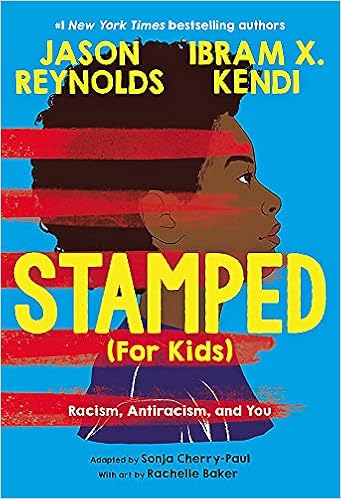
Stamped (For Kids): Racism, Antiracism, and You: Cherry-Paul, Sonja,  Reynolds, Jason, Kendi, Ibram X., Baker, Rachelle: 9780316167581:  Amazon.com: Books
Bibliography:
Cherry-Paul, Sonja. 2021. Stamped (for kids): racism, antiracism, and you . Ill. by Rachelle Baker. New York: Little, Brown and Company. ISBN 0316167584
 
Plot Summary:
Stamped (for Kids): Racism, Antiracism, and You tells the 400+ year story of racism in American one chapter at a time. The book goes all the way back to 1415 when Europeans were conquering lands around the world and enslaving people from those areas. It finishes with a chapter on the Black Lives Matter movement from 2016-2020. Each chapter includes a history of racism during a given time period and mini-biographies of people who have fought against racism along the way. There are also built in stopping points with guiding questions for young readers to reflect on the historical facts presented and connect them to current events and issues in America.

Critical Analysis:
Stamped (for Kids): Racism, Antiracism, and You is a remix of a remix that's written specifically for younger audiences. Cherry-Paul has expertly streamlined and simplified Stamped: Racism, Antiracism, and You by Jason Reynolds. The chapters read quickly and although filled with historical facts and truth, they feel more like a casual conversation with a friend. Cherry-Paul's writing style, tone, and voice make an often difficult subject to broach with kids very accessible. Baker's simple illustrations of the many antiracists throughout history are a powerful addition to the text. Each illustration highlights the powerful voices who made an impact and fought against racism over the years and often showcase some lesser known antiracists like Malcom X, Mahalia Jackson, and Angela Davis to name a few.

The short, chronological chapters focus on specific concepts throughout the book. In chapter 4, "Flawed Founding Fathers" Cherry-Paul writes, "Learning about the history of racism means discovering that some people, even some who you may have considered heroes, were deeply flawed individuals who had racist thoughts and did racist things" (Cherry-Paul, 2021). She goes on to explain how Thomas Jefferson wrote that all men were created equal, but he owned more than 600 enslaved people (Cherry Paul, 2021). Because of this contradiction of ideas verses actions, she helps the reader understand that racist ideas were woven into America's beginnings. In chapter 11, "Racism On-Screen," readers learn how racist ideas have been a part of beloved stories for years. Through specific examples of Tarzan and the Apes and Planet of the Apes, Cherry-Paul equips readers to think critically and notice racists imagery and themes that are present in today's media. As readers continue through the text, they gain a better understanding and appreciation for the struggles and accomplishments the African-American community has experienced over the years. 
 
The historical perspective of Stamped (for Kids) is a powerful viewpoint for children to read. The book eloquently connects the dots for readers using historical facts to see how racism started like a small seed and grew until it was deeply rooted into the very fabric of America. By including history that is often left out of the history books, readers are exposed to a more complete picture of the history of the United States that authentically captures the African-American experience.  For example, Cherry-Paul provides the history behind the cultural holiday of Juneteenth and explains how it is celebrated today. She explains why Malcom X didn't give a speech at The March on Washington even though he was just as much a part of the Civil Rights movement as Martin Luther King. And she celebrates the many African-American artists, musicians, and poets who exploded during the Harlem Renaissance.She also introduces many incredible African-American leaders over the last 200 years that may be unfamiliar to most young readers including Booker T. Washington, W.E.B. Du Bois, and Marcus Garvey.
 
Ultimately, Stamped (for Kids) is a kid-friendly overview of the African-American experience throughout history. It lays a foundation for understanding the roots of African-American culture and encourages readers to make connections between the past and the present to create a better future. With a fundamental understanding of the past, readers can accept the call to action to become antiracist.
 

Review Excerpts & Awards: 

BOOKLIST (June 1, 2021) "Kendi and Reynolds continue to share their vital antiracist message with this young reader’s edition of their celebrated collaboration, Stamped (2020). With the help of Cherry-Paul, the conversational tone is skillfully carried over from last year’s installment, with the distinction of shorter chapters and well-placed asides to provide additional context."
 
KIRKUS REVIEWS (May 1, 2021) "A remixed remix of a foundational text. Kendi’s Stamped From the Beginning (2016) is a crucial accounting of American history, rewritten and condensed for teens by Jason Reynolds as Stamped (2020). Educator Cherry-Paul takes the breadth of the first and the jaunty appeal of the second to spin a middle-grade version that manages to be both true to its forebears and yet all her own."

Connections: 

Books for Further Reading:

  • Weatherford, Carole Boston. Unspeakable: The Tulsa Race Massacre. 1541581202
  • Nelson, Kadir. Heart and Soul: The Story of America and African Americans.
    0061730793
  • Morrison, Toni. Remember: The Journey to School Integration
    9780618397402
  • Freedman, Russell. Freedom Walkers: The Story of the Montgomery Bus Boycott
    0823421953
  • Pinkney, Andrea Davis. Sit In: How Four Friends Stood Up by Sitting Down 9780316070164 

Sunday, September 26, 2021

African-American Lit: Before the Ever After

Before the Ever After

A Review by Amanda Kendall
 
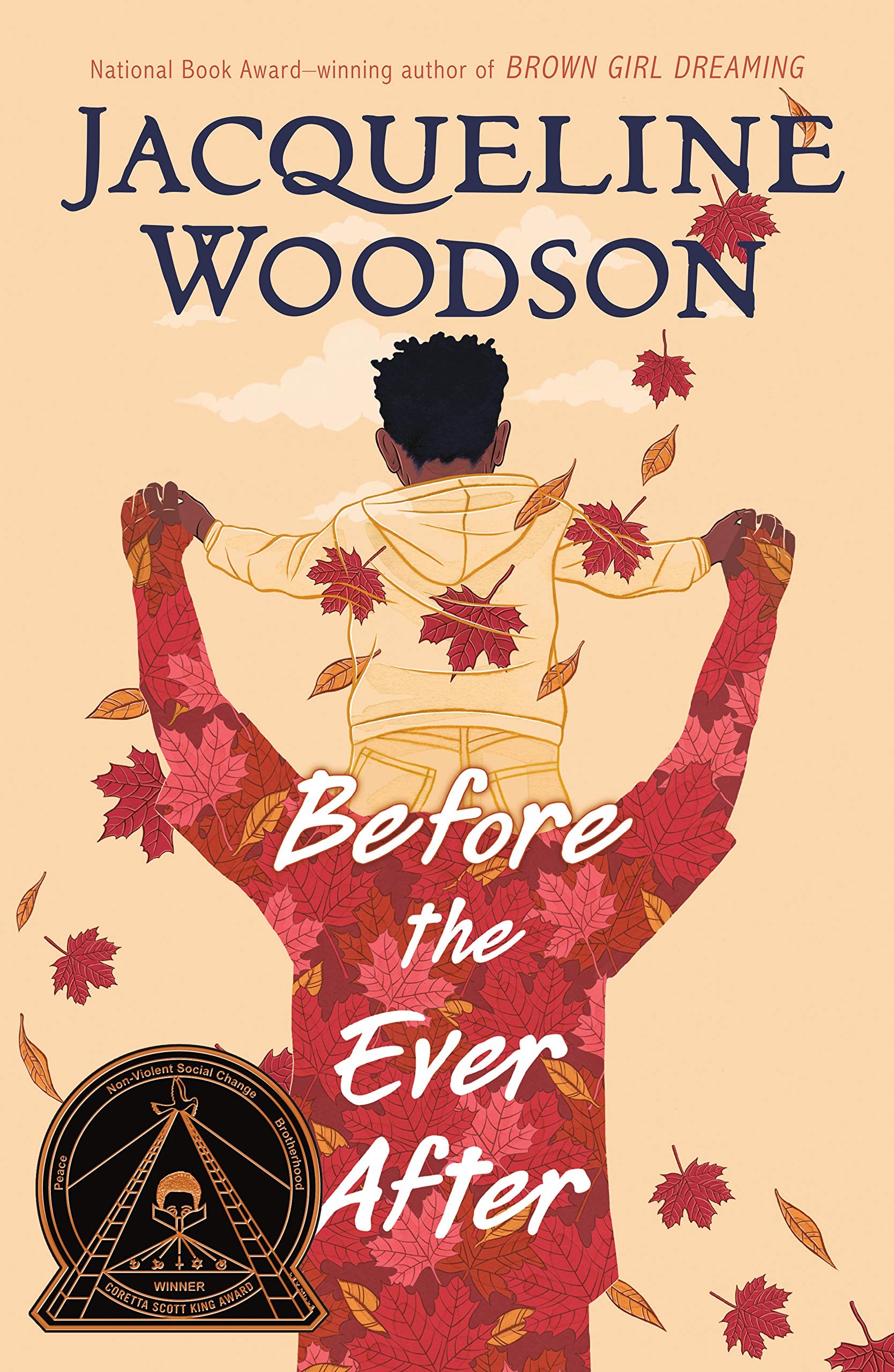
Before the Ever After: Woodson, Jacqueline: 9780399545436: Amazon.com: Books
Bibliography:
Woodson, Jacqueline. 2020. Before the Ever After. New York: Nancy Paulsen Books. 0399545433
 
Plot Summary:
For years, ZJ's dad has been everyone's favorite professional football player. His charismatic personality and talent on the field have made him a hero to his son, the neighborhood, and fans around the world. He is ZJ's role model and biggest fan. But suddenly something changes. He starts getting pounding headaches that won't go away. He is irritable and yells. He forgets words, places, memories, and people. ZJ and his mother watch on the sidelines while the person they love the most changes before their very eyes. As ZJ's dad's illness progresses, ZJ relies on his mom, his "boys," and his music to help him adjust to his new normal and hold on to his family unit.
 
Critical Analysis:
Before the Ever After is a relatively short novel in verse that lingers with the reader well beyond the last page. Set in 1999 and early 2000s, the story chronicles ZJ's emotional journey as he watches his father suffer from CTE (chronic traumatic encephalopathy), a then unknown illness after years of suffering concussions while playing professional football. Woodson's poetry sings on the page, jumping back and forth between vignettes that develop the plot and poems that focus on ZJ's feelings. The repetition, cadence, and tone of Woodson's poetry add to the authenticity of the novel inviting readers to experience the story right along with the characters.

ZJ's voice is pure as he narrates. It reads like a diary as he openly shares the confusion, hurt, and pain he is feeling. His authentic voice captures the fear of the unknown during this time for families of professional athletes. Many football players were experiencing similar symptoms but doctors did not have any answers. We see this authentic representation of the times throughout the novel when ZJ's dad is going to see another doctor for another treatment. As ZJ says, "Waiting. We're always waiting. Waiting for another doctor. Waiting for more tests. Waiting for test results. Waiting for new treatments" (Woodson 2020). His character is rich and complex, as are the minor characters of his father, mother, and friends.

In addition, the novel is rich in cultural details that reflect African-American experience. The dialogue between characters often includes words and phrases reflective of African-American culture including use of the word "Bruh" as a term of endearment and the phrase "just playing" to refer to joking around. ZJ also frequently takes pause throughout the novel to remember life with his dad before the headaches. He reflects on the bond they shared over music. His father used to say, "Make me a rhyme, little man" (Woodson, 2020) and ZJ would rap. The father-son duo would listen to hip-hop and create music together.  Music and language are used throughout the novel to show connections between the characters.
 
The story also shows an authentic experience of a Black family whose livelihood comes from professional sports. In one memory, ZJ's dad says, "What the house and the yard and the pool got to do with a guitar? Sometimes a parents going to give you something they wished they had when they were kids" (Woodson, 2020) ZJ's dad did not grow up with money, but his career allowed him to generously provide for his family. And while the family does have money and privileged now, the cost of that life has come at the expense of Zachariah Sr.'s physical and mental health. As his mind deteriorates and his career comes swiftly to an end, the family discovers their true friends. "We invited the people who keep coming around, the few friends who ask How are y'all doing and wait for our honest answers" (Woodson, 2020). While many people faded into the background of their lives, both ZJ and his mother have people to support and carry them through this difficult journey. ZJ's "boys" show up for him in every say and provide an unmatched support system for him.This cultural theme of friendship and the strength of extended family is repeatedly demonstrated throughout the novel. 
 
 
Review Excerpts & Awards: 

BOOKLIST (July, 2020) "Woodson again shows herself to be a masterful writer, and her meaningful exploration of concussions and head injuries in football, a subject rarely broached in middle-grade fiction, provides young athletes with necessary insights into sport's less glamorous side. In addition to this, it is a novel that explores family, mental illness, and the healing that a tight-knit, loving community can provide."
 
KIRKUS REVIEWS (July15, 2020) "Using spare and lyrical language for ZJ’s present-tense narration, which moves back and forth through time, Woodson skillfully portrays the confusion, fear, and sadness when a family member suffers from brain injury and the personality changes it brings. Readers see Zachariah Sr. through ZJ’s eyes and agonize with him as the strong, vibrant athlete begins to fade. The well-rounded secondary characters complete a mosaic of a loving African American family and their community of friends. The tale is set in the early 2000s, as awareness of chronic traumatic encephalopathy and its catastrophic consequences was beginning to emerge. A poignant and achingly beautiful narrative shedding light on the price of a violent sport."
  •  Coretta Scott King Author Award, 2021

 Curricular Connections:

  • Pair novel with a poetry lesson on poetic elements. Students use selected poems from the text to discuss figurative language, tone, and word choice.
  • Have students write a poem about a small moment in their life as modeled in the text.
  • Invite students to research more about chronic traumatic encephalopathy (CTE) and what changes have been made to football safety equipment since the disease was discovered.

African-American Lit: Ways to Make Sunshine

Ways to Make Sunshine

A Review by Amanda Kendall


Bibliography:
Watson, Renee. 2020. Ways to Make Sunshine. Ill. by Nina Mata. New York: Bloomsbury Children's Books. ISBN 1547606657
 
Plot Summary:
Given a name to live up to is a big responsibility, especially when your name means "king." But Ryan Hart is up for the challenge. She is determined to be a leader no matter what life throws at her. The story begins with Ryan's parents offering ice cream before dinner, a sure sign that bad news is coming. After Ryan's father lost his job with the post office months prior, he accepted a new job making less money. So, the family will have to downsize which means selling a car, moving to a smaller house, and cutting back on expenses. The story continues with Ryan enduring one spontaneous disaster after another including a failure at church, a contest to prove her loyalty to a friend, and a struggle to showcase her gift for cooking at the school's talent show. As Ryan copes with the changes and challenges in her daily life she finds sunshine in creating new recipes, spending time with family and friends, and finding the positive in every situation. 
 
Critical Analysis:
From the very first page, Ryan Hart's first person narrative welcomes readers into her world. She is smart, spunky, and determined to live up to her name. The novel unfolds as a series of short episodes where inevitably something goes terribly wrong for Ryan. From forgetting her lines at the Easter service (again!) to ruining her hair in the pool at a sleepover, Ryan finds herself in one unfortunate situation after another. Yet each time she pulls through with grace, humility, and positivity. Watson's writing style is engaging and clear. The short chapters read quickly keeping readers engaged in the text and eager to read one more chapter.  The grayscale illustrations are a window into Ryan's world and add to the authenticity of the text throughout the novel. One illustration shows Ryan's grandmother straightening her hair, honoring the cultural tradition of family and the importance of hair in the African-American culture. Another illustration shows Ryan sleeping in her head scarf to protect her hair. Yet another illustration beautifully captures the love of the Hart family with them all dancing and cooking together.
 
Ryan's story focuses on the everyday ups and downs of childhood including spats with her older brother, moving to a new (old) house, and being paranoid that she's lost her best friend. Watson's story has great universal appeal, but also captures the life of a 10 year old Black girl living in Portland with her family.  The main characters are richly developed, free of stereotypes, and show all sides of the human experience. One of Ryan's greatest gifts is compassion. She frequently shows empathy to the people around her, but it doesn't keep her from succumbing to jealousy at a friend's house and getting into a swimming contest with her nemesis. She's a real character, but not perfect and learning through her experiences alongside the reader.
 
Ryan's experiences also reflect distinct cultural experiences of a Black girl. Ryan struggles to see herself with her natural hair as beautiful and loves when her grandmother spends hours straightening it. But when she is pushed to her limits at her friend's sleepover, she jumps into the pool and consequently ruins her hair. As soon as it gets wet, her straight hair is gone and her "puffy" (Watson 2020) hair is back. She's upset and embarrassed so she runs off. But in true Ryan fashion, she finds her confidence, pulls her hair into "a big, big Afro puff" (Watson 2020), and rejoins the group saying she is trying to be the "beautiful person my Grandma says I am" (Watson 2020). This theme of beauty standards that oppress and make Ryan feel less than are one of the many cultural markers gently woven into this story.

Other important themes that reflect the African-American experience throughout the story are the effects of unemployment, loyalty and obligation to family, and the power of friendship. The effects of unemployment are threaded throughout the story. When Ryan is at the grocery story with her mother she doesn't ask for any special ingredients or spices for her recipes. She doesn't say a word when her mother puts the generic brand of cereal into the shopping cart and when Ryan burns the chicken, her mom quietly mumbles about the cost of the chicken, but tells Ryan it will be alright. For Ryan's family the loss of income has direct effects on their daily lives and that shows throughout the story, but it is always shown in a way that shows the family's love, respect, and loyalty to each other. Another important theme is friendship. Ryan has amazing friends that stick by her in every situation. When Ryan's hair is ruined in the pool and she runs off, only her friend, Amanda, can make her feel better. "Then Amanda comes to the floor. She doesn't knock or ask me if I'm okay. She just sits on the floor. I know it's her because she is the only one that when I'm upset, I don't want to talk about it" (Watson 2020). It is grandmother's advice that kindness is what makes a person beautiful and Amanda's unwavering support that gives her the strength to return to the party and join the fun. Throughout the novel, Ryan's friends and family are the foundation for her sunshine. Ways to Make Sunshine shows how positivity, kindness, and support from family and friends can make all the difference. Ryan continually lives up to her name by leading with kindness, compassion and heart for herself, her family, and her friends.
 

Review Excerpts & Awards:
 
BOOKLIST (March 15, 2020) "More than a window into the everyday experiences of children of color, this ensures that African American girls in particular feel seen."

SCHOOL LIBRARY JOURNAL (March 20, 2020) "From Easter speeches to African American hair care, this book will give those whose lives are like Ryan's an opportunity to feel seen. For those whose lives are different, this book provides a clear window into a nuclear family dealing with familiar topics in a unique way."
 
KIRKUS REVIEWS (February 15, 2020) "Each episodic chapter confronts Ryan with a situation; intermittently funny, frustrating, and touching, they should be familiar and accessible to readers, as when Ryan fumbles her Easter speech despite careful practice. Ryan, her family, and friends are black, and Watson continues to bring visibility to both Portland, Oregon, generally and its black community specifically, making another wonderful contribution that allows black readers to see themselves and all readers to find a character they can love. Move over Ramona Quimby, Portland has another neighbor you have to meet!"
  •  Bluebonnet Award Nominee - 2021

 Curricular Connections: 

  • Ryan loves to cook and create new recipes. Encourage students to cook a new recipe at home with family or create their own version of a family favorite by adding or swapping ingredients.
  • Create a keepsake box out of an old shoe box. Encourage students to select 3-4 artifacts that are meaningful to them to put in the box and share. Use the items in the box as inspiration for writing.
  • Make a list of "Ways to Make Sunshine" in your own life and share with the class.