Showing posts with label Native American Lit. Show all posts

Monday, November 1, 2021

Native American Lit: Crossing Bok Chitto


 Crossing Bok Chitto:

A Choctaw Tale of Friendship & Freedom

A Review by Amanda Kendall
 Crossing Bok Chitto: A Choctaw Tale of Friendship & Freedom: Tingle, Tim,  Bridges, Jeanne Rorex: 9781933693200: Amazon.com: Books
Bibliography:
Tingle, Tim. 2006. Crossing Bok Chitto: A Choctaw tale of friendship & freedom. Ill. by Jeanne Rorex Bridges. El Paso, Texas: Cinco Puntos Press. ISBN 0938317776
 
Plot Summary:
In the early nineteenth century, there was a river in Mississippi called Bok Chitto. The river separated the Choctaw Nation and American plantation owners and the enslaved people who lived there. The river acted as a border if an enslaved person made it across the river, they were considered free. 
 
Martha Tom, a young Choctaw girl, was sent by her mother to find blackberries. When she couldn't find any on the Choctaw's side of the river, she crossed. On the other side she found both blackberries and dozens of enslaved people attending the forbidden slave church. She was quickly discovered and escorted home by a young enslaved boy, Little Mo. Although they were from different sides of the river, the two became fast friends. When Little Mo's mother is sold from the plantation, he suggests to his family that they cross Bok Chitto to get to freedom. Desperate to save his family, Little Mo goes to Martha Tom for help. Martha organizes all the women in the village bring a candle to the river while dressed in white. Looking like angles, the Choctaw women distract the guards and bring Little Mo and his family safely across the river to freedom.
 
Critical Analysis:
 As a member of the Choctaw Nation, Tingle tells the story of Crossing Bok Chitto with honesty and authenticity. In his author's note he states that, "We Choctaw live by our stories" (Tingle 2006). This natural ability to tell a good story comes across on each page. There is a casual note to the narration that adds to the storytelling experience and makes the story accessible and engaging for all ages. 
  
Tingle's story is captivating from the beginning, explaining the significance of a single river and the power of crossing it. As the story unfolds, each character shows both fear and courage as they trust each other with their lives. The friendship developed between Little Mo and Martha Tom develops naturally, clearly showing respect for the other's culture. Tingle shows this mutual appreciation through the story. First when Little Mo visits the Choctaw side of the river and hears old men chanting. He says "it touched him deeply." And when Martha Tom starts attending church every Sunday to listen to the preacher and sing songs.
 
Bridges's illustrations aptly pair with the storytelling style of the text. The illustrations capture the  sweet yet somber mood of the story with muted colors and blurry backgrounds. Skin tones, clothing, and hairstyle and structure all reflect cultural and historical authenticity. In the image of Martha Tom and Little Mo crossing the hidden rocks in the river, the reader is drawn to the authentic Choctaw shoes while Little Mo is seen barefoot and in torn pants. The entirety of the story takes places outside and Bridges's illustrations are a beautiful blend of natural colors and hues. Finally, Bridges's captures the emotions of the characters fully with her expressive faces throughout the story. Many pages feature large full front portraits of characters, highlighting their emotions throughout the story. She elegantly captures the pain and sorrow of Little Mo and his family, as well as the determination and strength of the Choctaw women who come to the family's aid. 

Themes of family, empathy, friendship, and bravery ring true throughout the book. Tingle and Bridges have collaborated to create a tale that honors and celebrates the many different Native Nations that helped enslaved people find freedom (Tingle 2006). Cultural markers are embedded throughout the story and naturally incorporated into the illustrations. Tingle includes lyrics to Choctaw songs as they are still sung today, "Way, hey ya hey ya" (Tingle 2006) and includes a song from the forbidden slave church translated into Choctaw. All of these elements, plus the after notes at the end of the book provide the reader with the most authentic experience learning about the Choctaw in the past and today. Tingle's note links the past with the present, as the Choctaw Nation remains large, prosperous, and strong with a natural inclination to tell a good story (Tingle 2006).

Review Excerpts & Awards: 

BOOKLIST (April 15, 2006) "In a picture book that highlights rarely discussed intersections between Native Americans in the South and African Americans in bondage, a noted Choctaw storyteller and Cherokee artist join forces with stirring results...In her first paintings for a picture book, Bridges conveys the humanity and resilience of both peoples in forceful acrylics, frequently centering on dignified figures standing erect before moody landscapes."
 
SCHOOL LIBRARY JOURNAL (July 1, 2006) "Tingle is a performing storyteller, and his text has the rhythm and grace of that oral tradition. It will be easily and effectively read aloud. The paintings are dark and solemn, and the artist has done a wonderful job of depicting all of the characters as individuals, with many of them looking out of the page right at readers. The layout is well designed for groups as the images are large and easily seen from a distance. There is a note on modern Choctaw culture, and one on the development of this particular work. This is a lovely story, beautifully illustrated, though the ending requires a somewhat large leap of the imagination."
  • American Indian Youth Literature Award, 2008
  • ALA Notable Children's Books, 2007
  • Bluebonnet Award Nominee, 2008-2009

 Curricular Connections:

  • Tim Tingle writes "modern business and traditional culture live comfortably side-by-side" when describing the life of the Mississippi Choctaw today. Research more on the Choctaw tribe to learn what traditions endure today.

Saturday, October 30, 2021

Native American Lit: Birdsong

Birdsong

A Review by Amanda Kendall
Birdsong (picture book) - Wikipedia

Bibliography:
Flett, Julie. 2019. Birdsong. Vancouver: Greystone Books. ISBN 1771644737
 
Plot Summary:
In the span of a year, Katherena's life changes dramatically. In the spring, she moves with her mother from a house by the sea to a new home in the country. In the summer, her mother encourages her to go visit their older neighbor, Agnes whom Katherena instantly bonds with over a love of art and creating. In the fall, Katherena visits Agnes again and again, each visit bringing the two friends closer. In winter, Agnes gets sick and Katherena brings her salmon soup. When spring rolls around again, Katharena visits her friend to bring the beauty of nature to Agnes's bedroom.The two talk about art and enjoy the silence of each other's company. When Katherena leaves she reflects on how privileged she is to have Agnes as a friend.

Critical Analysis:
Julie Flett's talent for storytelling and creating are exquisitely showcased in Birdsong. A Cree-Metis author and illustrator, Flett shares her cultural background throughout the picture book. The thoughtful text sets a slower pace for this read and creates a reflective mood throughout the story. Simple sentences are expertly crafted to paint images in the readers mind and evoke emotion. For example in the line "It's a murky spring morning as we pack up the last of our belongings and leave our little home in the city by the sea" (Flett 2019) the words are simple enough, but the imagery is strong and the sadness of the character palatable. Strong descriptive words and meaningful dialogue move the story along at just the right pace showing the passing of time in both the everyday and the friendships developed over time.
 
Flett's pastel and pencil illustrations are soft and emotional. The natural colors and textures compliment the mood of the text. The earthy tones match the story's seasonal structure and bring a sense of calm and order to the story. In addition to the use of natural tones, Flett includes other authentic cultural markers throughout the text. Her characters are authentically represented in skin tone and show the everyday life of someone sharing her culture. The illustrations have a strong focus on nature and the natural order that nature brings to the world. The color tones, textures, and soft sometimes blurry lines, create soothing images. Flett focuses on birds throughout the illustrations, including a different species on almost every page. At times, the birds are the focus of the illustration as when the geese fly south for winter and other times they are subtly included sitting in a tree outside a window. The story and birds come full circle in the end when Katherena's drawings of each bird are put up around Agnes's room. Beautifully crafted, each illustration enhances the story and impresses the importance of connection to nature and creativity.
 
Cultural markers of the Cree-Metis people can be found flawlessly woven into the text. Authentic names are used for characters like Katharena and her dog, Ôhô which means owl in Cree. Katharena also tells Agnes about the Cree seasons, explaining that the current month "is called pimihâwîpisim - the migrating moon" (Flett, 2019). Katharena sleds on a toboggan and makes salmon soup to take to her friend. These small details help paint a beautiful authentic picture of a young Cree girl who has found a true friend in her neighbor.
 
Ultimately, Birdsong is a celebration of friendship. The friendship that develops between Katharena and Agnes shows how friendships can develop through shared interests regardless of age. It is the art and act of creating things that brings them together. Strong themes of nature, friendship, the passage of time, and finding beauty in the small moments all make this book a charming book about life.

Review Excerpts & Awards: 

PUBLISHER'S WEEKLY (September 30, 2019) "Cycling from spring to spring, Flett's subtle, sensitive story delicately traces filaments of growth and loss through intergenerational friendship, art making, and changing moons and seasons. Cree-Métis words (defined in a small glossary) add an intimate layer of identity to the child’s lustrous narration, which shines against the spare beauty of rich illustrations by Flett (who is Cree-Métis)"
 
KIRKUS REVIEWS (July 1, 2019) "Flett’s simple story explores the difficulties of moving but also shows young readers how new friends can sometimes ease them; that this friendship is an intergenerational one between fellow artists is an especially sweet touch. Flett (Cree/Métis) employs her characteristically minimalist style, placing Katherena against flat expanses of greensward that changes with the seasons, birds wheeling above in silhouette. Katherena and her mom both have brown skin and straight, black hair; Agnes has brown skin as well, but she does not speak Cree. Emotionally stunning.
  • Winner of the TD Canadian Children's Literature Award, 2020
  • American Indian Youth Literature Honor Title, 2020
  • A Boston Globe - Horn Book Honor Book
  • Best Book of the Year: Publisher's Weekly, School Library Journal, Kirkus, Horn Book, Quill & Quire, Globe and Mail

 Curricular Connections:

  • Seasons are an important element of the book. Have students create a collage of their favorite season using a variety of materials and textures.
  • Friendship is an important theme in Birdsong. Discuss what makes a good friend using examples from the book and create an anchor chart for reference.
  • Moving to a new place is difficult. Pair this text with Evelyn Del Rey is Moving Away by Meg Medina to explore how friendships may change and develop during this transitional time. 
  • Create a character change visual using a circle divided into 4 equal parts to show how Katherena changes throughout the year, season by season.

Native American Lit: Rez Dogs

 Rez Dogs

A Review by Amanda Kendall
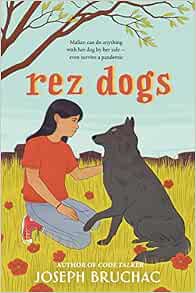
 Rez Dogs: Bruchac, Joseph: 9780593326213: Amazon.com: Books

Bibliography:
Bruchac, Joseph. 2021. Rez Dogs. New York: Dial Books for Young Readers. ISBN 0593326210
 
Plot Summary:
Malian is visiting her grandparents on the Wabanaki reservation when the world shuts down due to the COVID-19 global pandemic. With all travel halted, the reservation goes into lock down and Malian is unable to return to her parents in the city. She remains on the reservation helping to care for her grandparents and attending online school. Unexpectedly, a dog shows up and makes himself a part of the family. Malsum, a rez dog, has shown up at just the right time. He is there to protect and support the family. Together Malian and Malsum navigate life during the pandemic. Malian's grandparents share stories of their people and their history.  She makes connections between her reality and her people's experiences in the past. She embraces her heritage more with each story and finds the strength she needs to get through the pandemic is deeply rooted in her family, dog, and history.
 
Critical Analysis:
Rez Dogs is uniquely relevant to the lives of children and young adults today. Based on the history we are all living, this special novel will connect with many. Rez Dogs beautifully captures the experiences of many living through the COVID-19 pandemic. Bruchac uses free verse poetry to make Malian's story accessible to young readers. Her thoughts and emotions come across clearly through the poetry allowing the reader to feel her fear and hope every step of the way. Although the novel is set on the Wabanaki reservation, the experience of being stuck at home for months at a time, unable to see friends and participate in regularly scheduled life is universal for kids who are living through the pandemic. However, the reservation is a lovely backdrop for Malian's story to unfold, giving readers an look at how Native Americans live on a reservation today. As Malian explains, it's not the same as being in the big city where she lives with her parents, but just like the rez dogs, the reservation is a part of her and "a rez dog knows where it needs to be" (Bruchac 2021).
 
The text reads quickly, telling the story in a direct yet gentle way. Hard historical are covered but not lingered upon. For example, Grampa Roy reflects on his time in "Indian school" saying "every knuckle on both my hands got broken one time or another from being hit with that heavy ruler" (Bruchac 2021). And Grandma Frances explains how "it was still common for the Indian Health Services to make it so that Indian women could not give birth to any more children after they had had two or three...they'd done - an operation to prevent her from ever having more kids" (Bruchac 2021). In both these instances, Bruchac does a masterful job sharing historical truths with sensitivity and in age appropriate ways. This window into the history of Native Americans is expertly woven into the story. The details are included not to teach the outsider, but rather to show Malian the strength that her people have shown time and time again in the face of adversity, and getting through a global pandemic is another obstacle to overcome.
 
Family and stories are strong themes throughout the novel. Because Malian is locked down with her grandparents, the reader gets a front row seat to the beautiful intergenerational relationship between these characters. Her grandparents are there to protect her, and she is there to protect them. In addition, Malian's grandparents, both master storytellers share stories with her often. They use these stories to teach, guide, and give her strength. Even if she's heard the story before she loves to hear them again because "every storyteller had their own way of seeing a story without really changing it" (Bruchac 2021). At the end of the novel, Malian's teacher assigns an end of the year presentation to "tell your story." After months with her grandparents, Malian is uses her own storytelling skills to present a powerful presentation about her heritage, her family, and the  importance of taking care of each other and the land. 
 
Bruchac's use of cultural markers throughout the text prove why he is one of the most authentic, skilled, and trusted Native American writers for young people. By using authentic names, descriptions, and dialogue, Bruchac's characters are authentic in every way. Malian frequently uses the old Wabanaki language throughout the novel. For example, she says, "Kwai, kwai, nidoba. Hello, hello, my friend" (Bruchac 2021) when she first meets Malsum. Foods and cultural traditions are also included in the story. For example, her grandmother makes fry bread, and they leave a warm piece of bread "under a cedar tree to share it with the Manogies, the little people who are the guardians of the natural world" (Bruchac 2021). The story is saturated with cultural markers because they are so naturally a part of the setting and the characters.  

Review Excerpts & Awards: 

PUBLISHERS WEEKLY (May 31, 2021) " Employing the third-person perspective, Bruchac intricately interweaves past and present stories, displaying how Native mistreatment has been cyclical with a deft touch in this rewarding intergenerational narrative."
 
BOOKLIST (April 15, 2021) "Episodic in structure, it captures the family’s daily lives and shares the grandparents’ traditional stories, ensuring that a connection remains between them and the natural world. Readers also learn about injustices visited on Native peoples and hear Malian’s white teacher’s declaration that “we need to learn more of each other’s stories.” With this gentle book, Bruchac offers children another story to expand their worlds and hearts."

 Curricular Connections: 

  • Invite students to create their own "tell their story" presentation just like Malian's end of the year project.
  • Helping others is another important theme in Rez Dogs. Malian's choices while she is staying with her grandparents are always guided by her desire to protect and help her grandparents. Have students make a list of ways they can help and protect their families and others during the pandemic. (Examples: washing hands frequently, staying home when sick, etc.)

More Books by Joseph Bruchac:

  • Bruchac, Joseph. Code Talker: A Novel About the Navajo Marines of World War Two. 0803729219
  • Bruchac, Joseph. Peacemaker. 1984815377
  • Bruchac, Joseph. Skeleton Man. 0060290757
  • Bruchac, Joseph. Two Roads. 0735228868
  • Bruchac, Joseph. Talking Leaves. 0142422983